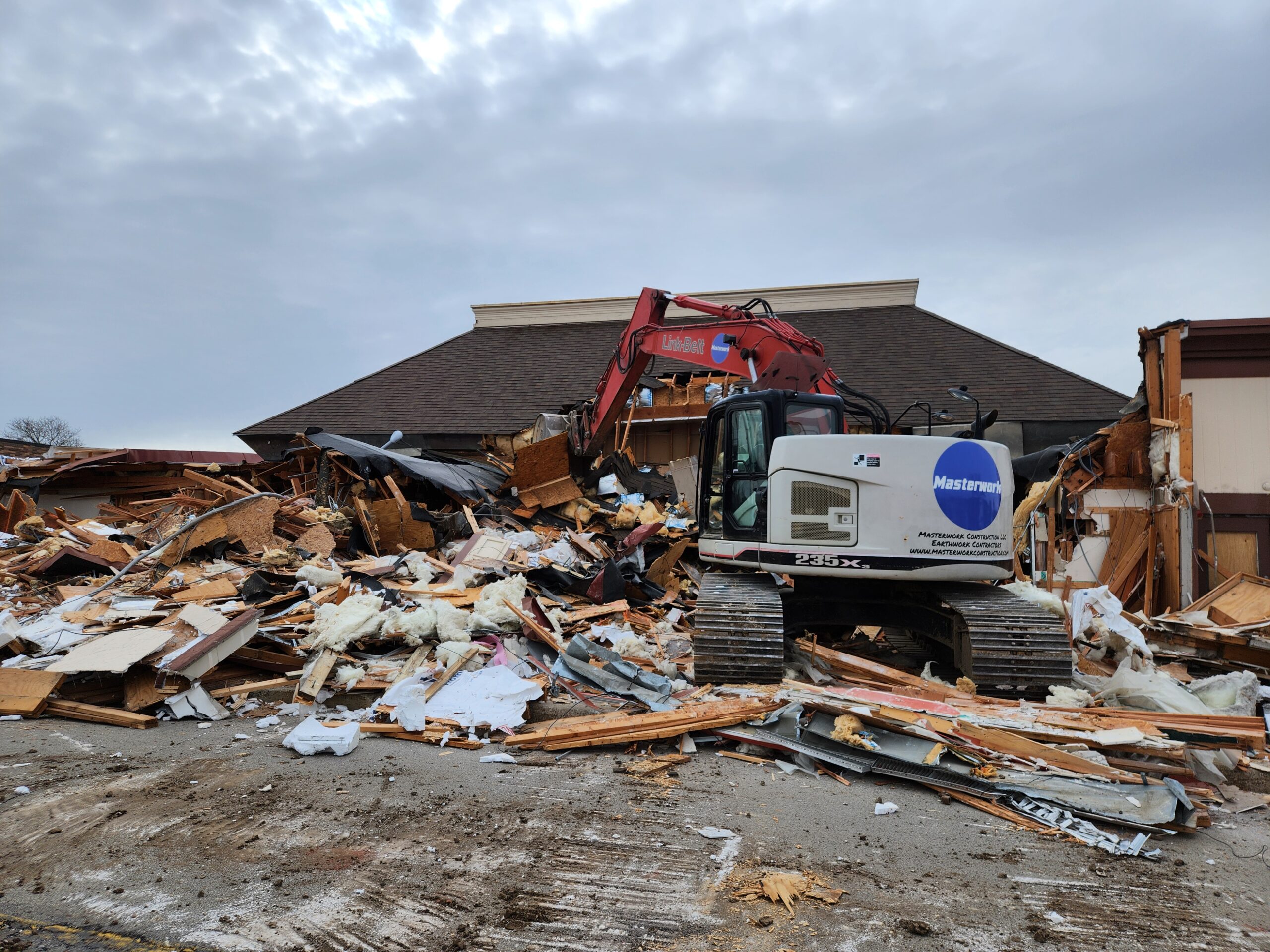
See our week-by-week timeline for a 1,500–2,000 sq ft tear-down, costs, and permits. Plan your demo and get a fast quote today.
If you are planning to remove an older home, garage, or light commercial building in the Milwaukee area, a clear timeline helps everything run smoothly. This guide breaks down a realistic week-by-week schedule for a 1,500 to 2,000 square foot tear-down, along with the permits, costs, and decisions you will face. Masterwork Construction brings a balanced approach that combines modern equipment, experienced operators, and local know-how so you get a clean, safe site ready for the next phase.
Why work with a wrecking contractor Milwaukee property owners trust
Choosing the right partner matters. Demolition looks quick on video, but the real work happens in the planning, safety controls, and restoration. Masterwork Construction is an earthwork and mechanical demolition contractor based in Grafton and serving southeastern Wisconsin, including Ozaukee, Milwaukee, Waukesha, and Washington counties. Since 2015, our team has focused on precision and quality, using modern equipment and new industry technologies to make every step efficient.
Beyond tear-downs, we handle excavation, grading, stormwater utilities, gravel driveway installation, pond development, roadway construction, and mass excavation. That range means we can take your project from structure removal through backfill, compaction, and rough grade without slowing down. When you search for a wrecking contractor Milwaukee homeowners and builders rely on, you want experience, safety, and a clear plan. That is what we deliver.
At-a-glance timeline for a 1,500–2,000 sq ft tear-down
Most standard residential structures in this size range can be planned, permitted, demolished, and backfilled within about four weeks after you green-light the work. If abatement or special utility challenges arise, expect an extra week or two. Here is the simple view before we break it down:
- Week 1: Site visit, estimate, contract, permit applications, utility requests, asbestos inspection
- Week 2: Approvals in progress, pre-demo erosion control, salvage, abatement, final logistics
- Week 3: Mechanical demolition, debris separation, hauling, on-site crushing if used
- Week 4: Backfill, compaction, rough grading, driveway stabilization, final inspections
- Optional Week 5: Topsoil placement, seeding, punch list, closeout package
Week 1: Kickoff, permits, and inspections
On-site visit and scope confirmation
We start with a site meeting to confirm building size, access, lot constraints, trees, nearby structures, and the end goal for the site. For a rebuild, we discuss foundation removal, basement backfill, and the target subgrade for the new build. For a clean lot, we plan final contour and erosion controls that will protect the property and neighbors.
Estimate and contract
Within a short window, Masterwork Construction sends a written estimate that outlines demolition scope, hauling assumptions, utilities, erosion control, backfill materials, and any known allowances. Once approved, we move immediately to permits and scheduling.
Permits and notifications
In Milwaukee and many surrounding communities, you will need a demolition permit, erosion control permit, and sometimes a right of way permit if we stage equipment near the street. We handle permit paperwork and coordinate with the local building department. At the same time, we arrange utility disconnects and schedule utility locates through Diggers Hotline by calling 811. Gas, electric, water, and telecom shut-offs must be completed before the first bucket touches the structure.
Asbestos inspection and hazardous materials
Wisconsin requires an asbestos inspection before demolition. A licensed inspector checks for regulated materials in flooring, siding, mastics, insulation, and more. If asbestos is present, abatement is performed by a licensed abatement contractor. We coordinate timing so the survey and any abatement happen before demolition week. We also ask the owner to remove household items, chemicals, paints, and fuels. These cannot go into mixed debris.
Week 2: Approvals, abatement, and site prep
Permit and utility milestones
During week 2, we confirm utility cutoffs and wait for final permit approvals if still pending. Our scheduler lines up the excavator, processors, trucks, and crew accordingly. If the site has limited access, we set a haul route plan to keep trucks moving without blocking neighbors.
Pre-demo erosion control and staging
We install silt fence, inlet protection, and a stabilized construction entrance where needed. This reduces track-out to the street and keeps sediment on site. We mark tree protection zones and fencing for any trees you intend to save.
Salvage and abatement
Salvage happens first. Doors, fixtures, or other items you want to keep are removed. If an asbestos inspector called out specific materials, a licensed abatement team handles removal and disposal according to state rules. Only after clearance do we schedule mechanical demolition.
Week 3: Mechanical demolition and debris management
Structure tear-down
For a typical 1,500 to 2,000 square foot residential structure, actual physical demolition often takes one to two days. We use an excavator with a hydraulic thumb or processor to pull material inward and control dust. A water source is used for dust suppression while maintaining runoff control. If there is a basement, we break the foundation, remove debris, and prepare for backfill.
Material separation and hauling
We separate concrete, masonry, metal, and clean lumber as practical to reduce landfill tonnage and improve recycling rates. Concrete and asphalt can be hauled to recycling facilities or crushed on site if allowed by the permit and the neighborhood. Mixed debris is loaded and hauled to an approved facility with manifests saved for your records.
Safety and neighbors
Safety is non negotiable. We secure the site, keep a clear swing radius, and post spotters as needed. We monitor dust, noise, and truck staging to limit disruption. Good communication with neighbors prevents surprises and keeps your project on good terms with the block.
Week 4: Backfill, compaction, and final grading
Basement backfill and compaction
Once debris is removed, we backfill any excavated areas with suitable materials. Masterwork Construction uses compacted lifts to achieve density targets that support your next build. Proper compaction reduces settlement and helps your foundation contractor start with confidence.
Rough grade and erosion control
We bring the site to a stable rough grade shaped away from structures and toward approved drainage paths. Erosion controls remain in place. When needed, we install a temporary gravel surface for access. If your plan calls for a gravel driveway or a pond feature, our team can build that at this stage, saving time later.
Closeout and inspection
We call for required inspections and provide disposal tickets if requested. The site is left clean, safe, and ready for the next phase. Many homeowners and builders appreciate a single point of responsibility from tear-down through site preparation, which is why Masterwork Construction manages both demolition and earthwork.
Optional Week 5: Seeding and punch list
If your schedule allows, we can place topsoil, seed, and blanket to stabilize disturbed areas. Final items are checked, and closeout documents are delivered. If you are starting new construction right away, we align final grades with your builder’s foundation plan.
Permit basics for Milwaukee and nearby communities
Every municipality has its own process, but the core steps are similar throughout southeastern Wisconsin. Milwaukee typically requires a demolition permit and erosion control plan. Neighboring cities and villages follow comparable procedures. Allow enough time for approvals and utility cutoffs so you are not paying crews to wait.
- Demolition permit: Applied for by the contractor, may require site plan and proof of utility disconnects
- Erosion control: Silt fence, inlet protection, and tracking control are common requirements
- Asbestos: Inspection is required, and abatement must precede demolition if needed
- Utility disconnects: Gas, electric, water, sewer capping, and telecom must be confirmed
- Historic or special districts: Additional reviews may apply for certain properties
Masterwork Construction handles the paperwork and coordinates with inspectors. We also communicate timelines so you know what happens next. If you are searching for a wrecking contractor Milwaukee inspectors know and trust, choose a team that treats compliance as part of the craft.
Cost range for a 1,500–2,000 sq ft tear-down
Costs vary by structure, access, materials, and disposal volumes. For planning in the Milwaukee area, here are typical budget ranges for a standard residential tear-down of this size:
- Mechanical demolition and haul-off: Often 10 to 18 dollars per square foot depending on material mix and access
- Total typical range: Around 15,000 to 36,000 dollars for 1,500 to 2,000 square feet
- Permits and fees: 300 to 1,500 dollars depending on jurisdiction and scope
- Asbestos survey: 300 to 800 dollars for standard single family inspections
- Asbestos abatement if needed: Varies widely, from 1,000 to 8,000 dollars plus depending on findings
- Utility disconnect fees: Utility dependent, some at no cost, others 300 to 1,500 dollars per service
- Backfill and compaction: Included in many quotes, or 2,000 to 8,000 dollars if billed separately
Factors that push costs up include tight access, heavy masonry, multiple layers of roofing, high landfill tonnage, and long hauling distances. Salvage credits, on-site concrete crushing, and clean separation of materials can reduce disposal costs. Masterwork Construction is transparent with line items, so you can see what drives the budget and where we can save.
What can speed up or slow down the schedule
- Speed up: Early utility disconnect requests, quick owner decisions, clean site access, no abatement
- Slow down: Asbestos or lead hazards, seasonal weight limits on roads, wet weather, buried tanks or wells, incomplete disconnects
- Neutral but important: Historic reviews, neighbor notifications, change in final grade plan
We build float into the schedule for weather and approvals. If we see something unexpected like an old cistern or fuel tank, we document and propose safe, cost-effective solutions.
What Masterwork Construction includes
As a full-service earthwork contractor, we do more than knock a building down. Our team can carry your project from first cut to final grade. Here is how that benefits you:
- Mechanical demolition with dust control and safe handling
- Debris separation and responsible disposal with recycling where practical
- Foundation removal, concrete breaking, on-site crushing when allowed
- Basement backfill, compaction, and proof rolling as needed
- Rough grade, erosion control, and stabilized access
- Gravel driveway installation, pond development, and drainage improvements
- Stormwater utility solutions, including underground retention and sewer repairs
- Site development and value engineering for the next phase
Masterwork Construction matches modern equipment with experienced operators. That combination saves time and reduces rework. If you need a wrecking contractor Milwaukee builders can pair with for excavation, frost footings, roadways, or athletic fields, our team has you covered.
Homeowner and builder checklist
Use this checklist to prepare for a smooth tear-down:
- Decide what to salvage or donate and remove personal items
- Provide proof of ownership or authorization for demolition
- Confirm utility account status and allow time for disconnects
- Share any old surveys, building plans, or known site hazards
- Identify trees to save and mark protection zones
- Choose your end goal: clean lot, new foundation, or rough grade for landscaping
- Coordinate mail, package delivery, and neighbor notifications
- Plan parking locations for crew and trucks on demo days
Disposal and recycling practices
Responsible disposal is part of being a good neighbor and a good contractor. Masterwork Construction separates concrete, metal, and clean asphalt for recycling when practical. Mixed debris goes to approved facilities with tracking. On some sites, we crush concrete on site and reuse it as base, which reduces hauling and cost. Our goal is to minimize landfill use while keeping the schedule intact.
Safety, noise, and cleanliness
Safety comes first for our crew and your neighborhood. We manage dust with water, control noise by sequencing work during normal hours, and keep the street clean with tracking control and street sweeping when needed. Fencing and signage define the work area. We also communicate daily with you so you always know what is happening next.
Frequently asked questions
How long will my project take?
Most 1,500 to 2,000 square foot tear-downs wrap up in about four weeks from the go-ahead, not counting the time you may need to decide scope or design the replacement structure. The physical demolition part is usually one to two days once utilities are clear and permits are in hand.
Do I need to be on site?
Not during demolition. We will ask you to be available by phone for decisions. For safety reasons, the work area is restricted during active demo.
What if asbestos is found?
A licensed abatement contractor removes it before demolition. We coordinate timing so the schedule can resume quickly after clearance.
Can you leave the foundation for partial demolition?
Yes, if that is part of your design. We can remove a porch, garage, or addition and protect the rest. We will propose a plan that keeps the structure safe during selective demo.
What happens to the basement hole?
If you are not rebuilding right away, we backfill and compact the area to a stable grade. If a new foundation is coming soon, we shape the site to support your builder’s layout and equipment.
Can weather stop the work?
Heavy rain or freeze-thaw cycles can slow hauling and compaction. We monitor forecasts and stage materials to keep moving. Seasonal road limits can also affect truck loads in certain municipalities.
Why Masterwork Construction is a strong choice
Masterwork Construction blends mechanical demolition with deep earthwork expertise. We have worked across southeastern Wisconsin on residential and commercial site development, stormwater solutions, roadway construction, and mass excavation. That breadth means we can help you value engineer the entire plan, not just the tear-down. We focus on safety, integrity, teamwork, and clear communication. Our clients appreciate that we hit dates and leave the property ready for the next step.
Get a fast quote from a wrecking contractor Milwaukee trusts
Ready to plan your tear-down the right way? Call Masterwork Construction at 414-762-7000 to schedule a site visit. Tell us about your structure, timeline, and end goal, and we will build a clean, week-by-week plan with transparent pricing. If you prefer, reach out through our website and we will follow up quickly. Whether you need a simple tear-down or a complete site package that includes excavation, grading, stormwater, and a gravel driveway, you will get a professional team that treats your project like our own.
When you think wrecking contractor Milwaukee, think Masterwork Construction. We are ready to clear the way for what comes next.