Why Drain Size Matters for Every Property
When rain falls, it must go somewhere fast. Modern homes, businesses, and roadways add hard surfaces that shed water instead of absorbing it. If your storm drains, pipes, and inlets are too small for the flow they receive, the system backs up. Water takes the path of least resistance, which often means toward your foundation, across your lawn, over your driveway, or into your building. That is why right sizing is the heart of good stormwater utility installation.
Proper design considers the amount of rainfall your site receives, the shape and slope of the land, the type of soil, and how much of the surface is paved or roofed. Southeastern Wisconsin often sees fast summer downpours and spring snowmelt. Clay rich soils in many neighborhoods drain slowly. These conditions increase peak runoff. If the stormwater system does not match the real world flows, the gap shows up as ponding, erosion, and water damage.
Real Risks of Undersized Drains
- Basement flooding that damages finishes, mechanical systems, and stored items
- Foundation settlement from saturated soils around footings
- Heaving and potholes in driveways, parking lots, and sidewalks
- Sinkholes and voids where water scours around pipes and manholes
- Erosion on slopes, along swales, and at downspout outlets
- Backups that push stormwater into sanitary lines and overwork sump pumps
- Standing water that attracts pests and creates slippery winter ice
- Landscape loss from mulch washouts and plant root rot
- Premature failure of pavement subbase due to trapped moisture
- Liability exposure when pooling water blocks access or causes accidents
- Higher insurance costs or claims denied when maintenance is neglected
These problems are more than annoying. Water is relentless. Each storm adds wear to your site. In our region, freeze and thaw cycles magnify the damage. Water that lingers in joints and cracks turns to ice, expands, and breaks materials apart. Correcting the root cause early is usually more affordable than repairing damage after the fact.
How to Tell Your Drain System Is Too Small
- Ponding that lasts hours after a typical storm
- Bubbling at yard drains or catch basins during rainfall
- Water lines or silt rings on concrete around inlets
- Rills or channels carved into soil or mulch after storms
- Gurgling sounds in storm pipes or downspouts
- Manhole lids that rattle or seep water under flow
- Lawn areas that squish underfoot long after rain stops
- Sump pumps that cycle often during moderate rain
- Musty odors or algae growth near persistent puddles
- Ice sheets in the same places each winter
If you see any of these signs, it is time to have a professional take a closer look. Early action can prevent greater costs later.
Common Design Mistakes That Lead to Undersized Systems
- Underestimating the true impervious area after renovations or additions
- Ignoring future changes such as patios, sheds, or new parking spaces
- Using rainfall data that does not reflect current storm intensity
- Assuming soils infiltrate better than they do in clay rich areas
- Not accounting for leaf litter that reduces inlet grate capacity
- Too few catch basins for long curb lines or large parking lots
- Pipes set at minimal slopes that lower conveyance
- Outlet restrictions that back water into upstream pipes
- Small orifices that slow release from underground detention
- Inadequate emergency overflow paths for extreme storms
- Flexible tubing used where rigid pipe is required for load or alignment
These issues show why stormwater utility installation is more than digging a trench and placing a pipe. It takes site specific planning, proven methods, and field experience to deliver a system that performs in real weather.
What Proper Stormwater Utility Installation Involves
Masterwork Construction approaches stormwater as a system. We match your site conditions with the right mix of collection, conveyance, detention, and controlled release. From residential yards to large commercial parcels, our team focuses on capacity, durability, and long service life. Here is how a sound process works.
Site Assessment and Hydrology
- Survey the site to map elevations, slopes, and drainage paths
- Measure contributing areas for roofs, pavement, and landscaped surfaces
- Evaluate soils through borings or test pits to confirm infiltration potential
- Select design storms based on local standards and your risk tolerance
- Compute peak flows using accepted methods that fit the site
- Check downstream conditions to confirm the outlet can handle added flow
- Plan safe overflow routes for rare but intense events
Right Sizing Your System
- Catch basin placement and spacing so water reaches inlets fast
- Proper grate types that handle leaves and debris
- Pipe diameters and slopes that convey storm flows without surcharge
- Junction structures sized for internal flow transitions
- Underground detention chambers or oversized pipes to store water
- Infiltration systems such as trenches or bioretention where soils allow
- Swales and regrading to direct water safely to inlets
- Energy dissipation and erosion control at outlets
Quality Construction Practices
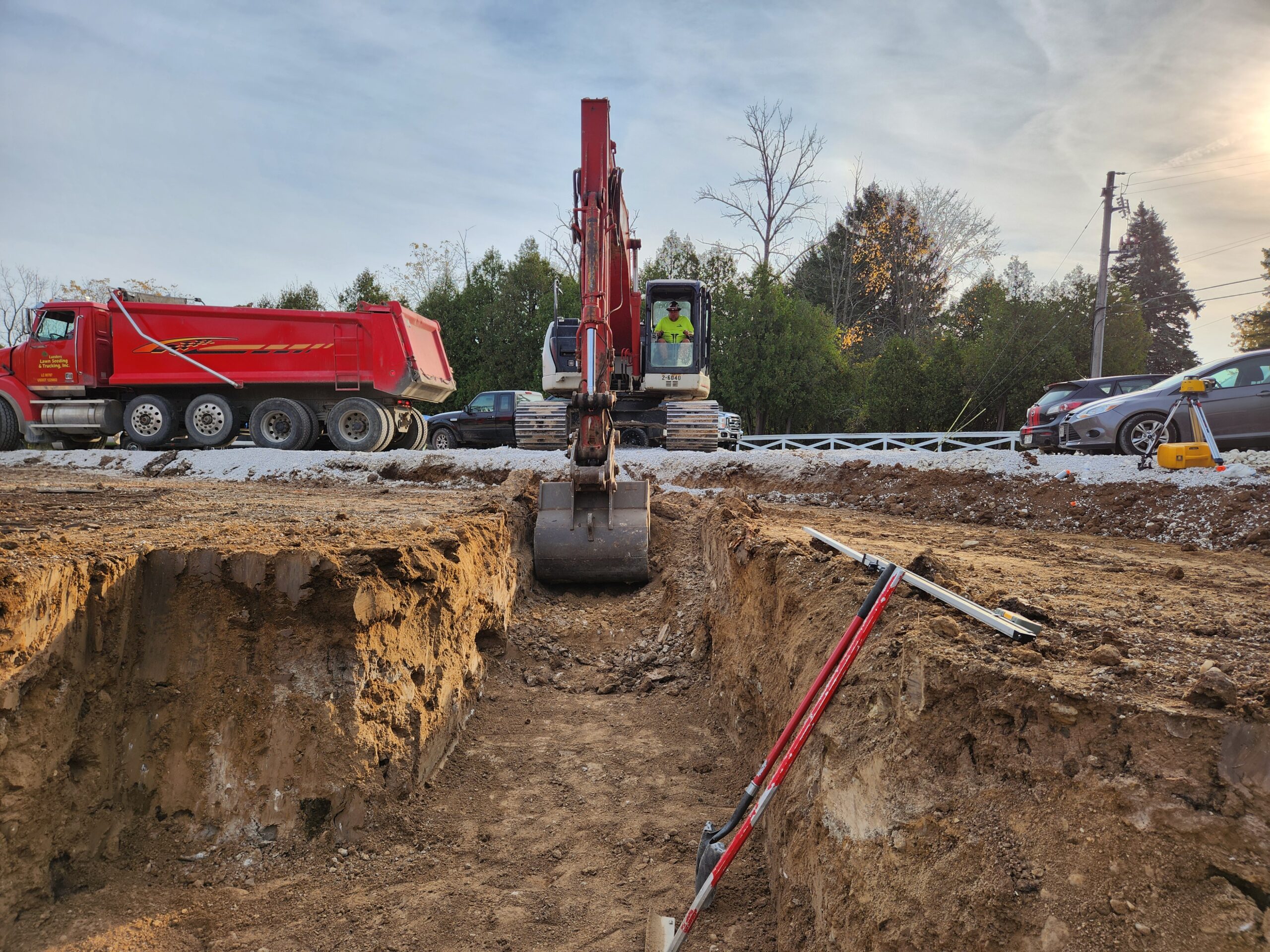
- Excavation with stable slopes and dry trench management
- Correct bedding and compaction of backfill to protect pipes
- Laser guided grading for consistent slopes
- Gasketed joints and watertight structures to prevent infiltration and exfiltration
- Sediment control to keep new systems clean during construction
- Mandrel or deflection tests for flexible pipe where required
- CCTV inspection to verify cleanliness and alignment
- Clear as built records for future maintenance
Masterwork Construction uses modern equipment and experienced crews to carry out every stage with precision. We coordinate with your schedule and other trades to keep your project moving.
Repair and Upgrade Options for Undersized Drains
- Upsize existing pipes to increase conveyance
- Add catch basins where ponding occurs
- Regrade surfaces to remove low spots and improve flow
- Retrofit outlet controls to tune release rates
- Install underground detention to reduce peak discharge
- Repair or replace failing storm sewer segments
- Disconnect roof leaders and route to infiltration where suitable
- Add check valves or backflow devices at vulnerable connections
- Replace grates with higher capacity designs where safe
- Rebuild soft or undermined subbase under pavement
Upgrades can be phased to match budgets and operational needs. Masterwork Construction helps you prioritize the highest value steps first, then plan for long range improvements.
Undersized Drain Impacts by Property Type
- Homes: Water in basements, flooded window wells, soggy lawns, and icy walkways. Solutions often include yard drains, regrading, and underground detention sized for connected downspouts.
- Commercial sites: Parking lot ponding, customer access issues, and pavement failure. Fixes may include new inlets along long curb runs, larger trunk lines, and large volume underground storage under parking stalls.
- Industrial and logistics yards: Heavy truck traffic amplifies subgrade damage when water is trapped. Durable pipes, robust subbase, and strategic detention protect operations.
- HOA and multifamily: Shared systems must handle multiple roofs and lots. Maintenance access, clear easements, and resilient designs help control long term costs.
- Athletic fields and parks: Playability depends on drainage. Grading, underdrains, and swales move water off fields and trails quickly.
Local Expertise Matters in Southeastern Wisconsin
Designing for southeastern Wisconsin means planning for fast summer storms, spring snowmelt, and long freeze periods. Many neighborhoods have tight glacial soils that limit infiltration. Older systems may also outlet into waterways with regulated release rates. Masterwork Construction understands these local realities. We size systems to meet local expectations and to fit the way water moves on your site. We also coordinate with municipal requirements and utility owners so improvements integrate smoothly with public infrastructure.
How Masterwork Construction Delivers Value
- Value engineering that balances cost, schedule, and performance
- Modern equipment and technology for efficient and accurate work
- Experienced crews trained in excavation, grading, and stormwater utility installation
- Safety first culture that keeps people and property protected
- Clear communication from bid through closeout
- Thorough documentation and as builts to support maintenance
- Respect for your site and operations during construction
Because stormwater touches many parts of a project, we coordinate across trades and phases. Our team can handle excavation for basements and footings, grading for roads and parking lots, mechanical demolition and site clearing, gravel driveway construction, and pond development. This broad capability helps reduce change orders and keeps your timeline on track.
About Masterwork Construction
Masterwork Construction is a professional earthwork company based in Grafton, Wisconsin. We proudly serve southeastern Wisconsin, including Ozaukee, Milwaukee, Waukesha, and Washington counties. Founded in 2015, we build and maintain heavy civil and site projects with a focus on precision and quality. Our services include excavation, grading, stormwater utility solutions, mechanical demolition, gravel driveway installation, pond development, roadway construction, and mass excavation. We also support commercial and residential site development with thoughtful value engineering to control cost and boost performance.
Our stormwater team installs underground water retention systems, repairs storm sewer piping, and builds reliable drainage for homes, businesses, and public projects. We bring modern equipment, new industry technologies, and skilled craftsmen to every job. Safety, integrity, and long term client relationships guide our work. When you need dependable stormwater utility installation or related earthwork, Masterwork Construction is ready to help.
Frequently Asked Questions
Do I need a permit for stormwater utility installation?
Most communities require permits for new connections, underground detention, or work within public right of way. Some projects also need erosion control permits. Masterwork Construction coordinates with local authorities and helps assemble the documents you need.
How long does a typical installation take?
Small residential improvements can take a day or two once permits are in place. Larger commercial systems may take several weeks depending on size, depth, and site access. We provide a clear schedule and keep you updated.
Can you upgrade my existing storm system without full replacement?
Yes. Many sites benefit from targeted improvements such as added inlets, outlet control changes, or underground storage under open pavement areas. We assess your system and propose the most cost effective steps first.
Will new drains fix basement flooding?
Often yes, when the cause is surface water around the home. In some cases, foundation drainage and sump pump improvements also help. We evaluate all sources of water to give you a complete plan.
What is the difference between site drainage and stormwater utility installation?
Site drainage includes features such as swales, grading, and surface flow paths. Stormwater utility installation focuses on the built system that collects and conveys runoff. This includes catch basins, pipes, manholes, detention units, and outlets. A good project blends both to control water above and below ground.
Steps to Right Size Your System
- Schedule a site visit to review problem areas and goals
- Measure and map the drainage area and surface types
- Test soil where infiltration or detention may be used
- Model runoff for design storms appropriate to your site
- Develop alternatives with pros, cons, and budget ranges
- Select the preferred option and complete permit drawings
- Install with strict quality control and documented testing
- Provide maintenance guidance for long term performance
Masterwork Construction follows this process to reduce surprises and deliver results you can trust.
Maintenance Tips to Keep Drains Working
- Clear leaves and debris from grates before and after storms
- Inspect catch basin sumps and clean when sediment builds up
- Keep downspout screens in place and functioning
- Check for settlement or cracks around structures
- Watch for new ponding after site changes and call for an assessment
- Document maintenance activities to support warranty and compliance
A well built system performs best with simple routine care. We can set up a schedule that fits your property.
Get a Professional Assessment
If you suspect your storm drains are undersized, do not wait for the next big storm. The fix is often straightforward once the root cause is clear. Masterwork Construction offers stormwater utility installation and repair services tailored to your site and budget. Call 414-762-7000 or reach out through our website to schedule a consultation. We serve Grafton and the wider southeastern Wisconsin region, including Ozaukee, Milwaukee, Waukesha, and Washington counties. Let our team evaluate your system, share practical options, and put water back under control.
With the right plan and the right partner, you can protect your property, extend the life of your pavement and landscaping, and avoid costly water damage. Masterwork Construction is ready to help you right size your drains and install a system that works when it matters most.