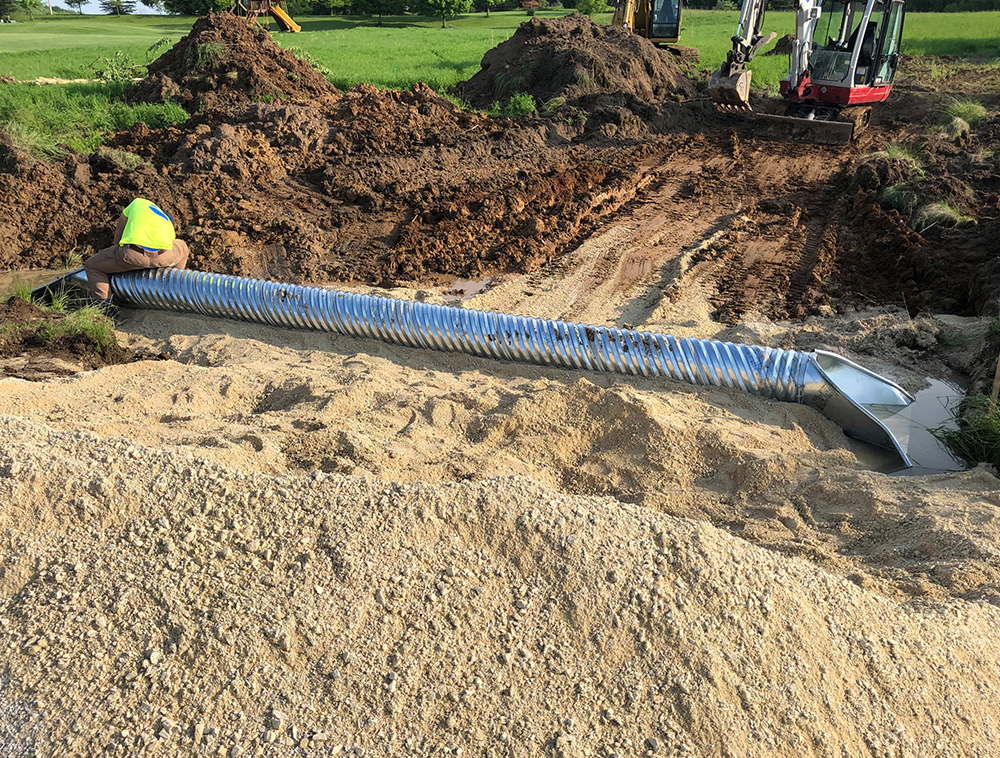
Stormwater management contractor insights on why systems fail in heavy rain and how to prevent floods. Spot warning signs and solutions. Book an assessment today with Masterwork Construction for reliable drainage repairs and upgrades that stand up to Wisconsin weather.
Why stormwater systems struggle during heavy rain
Most stormwater systems are built to handle a certain amount of rain over a set time. When a fast, intense storm hits, that safe limit can be passed in minutes. Add debris, aging parts, or site changes, and runoff that usually moves through pipes and basins has nowhere to go. Water backs up, lawns and parking lots fill, and basements or roadways can flood. As a stormwater management contractor serving southeastern Wisconsin, Masterwork Construction sees recurring patterns behind these failures and helps property owners fix the root causes.
Design capacity limits
Older systems often reflect rainfall data and design methods that no longer match today’s storm intensity. Even newer systems can struggle if the site has changed or if extreme weather pushes beyond modeled conditions. When the system’s capacity is too small, the first signs are usually ponding at inlets and manholes under surcharge.
- Design points based on older rainfall intensity curves
- Pipe diameters or basin volumes that are undersized for current runoff
- Insufficient inlet count or poor inlet locations that limit inflow
- No defined overflow paths to move excess water safely
Blockages and debris
Clogged grates, silted pipes, and debris in ditches choke flow. Even a little buildup at critical inlets can cause widespread flooding on a site. Masterwork Construction often finds blocked catch basins and buried outfalls after long dry spells followed by a heavy rain.
- Leaves, twigs, and trash caught on grates and curb openings
- Sediment and grit settled in sump basins and pipes
- Construction spoil, mulch, and landscaping media migrating into drains
- Ice or snowpack left in front of inlets during spring thaws
Aging or failed components
Materials wear out. Joints separate. Metal corrodes. As pipes and structures age, they can lose capacity or begin to leak and erode surrounding soils, which leads to sinkholes and larger failures.
- Cracked or offset pipes that catch debris and slow flow
- Rusted corrugated metal culverts with holes that cause voids
- Collapsed laterals or broken tees from heavy loads or freeze-thaw cycles
- Damaged outlet structures and missing trash racks that let debris pass downstream
Soil and infiltration issues
Systems that rely on infiltration can fail if soils are tight, compacted, or already saturated. Southeastern Wisconsin has many clay-rich areas, which can limit infiltration during back-to-back storms.
- Compacted subgrades after construction or repeated traffic
- High groundwater tables that leave no storage space in the soil
- Frozen ground that sheds water like pavement
- Fine sediment clogging infiltration media over time
Site changes increase runoff
Many properties evolve. New buildings, additions, or paving change how rainfall moves and how quickly it arrives at inlets. If the stormwater network is not updated to match, it will likely overflow in heavy rain.
- Added roof area or larger parking lots without system upgrades
- Grading changes that send water to a single low spot
- Landscape berms that block flow to inlets
- Neighboring development that reroutes runoff toward your site
Construction phase risks
Active construction sites experience higher runoff and more sediment without robust controls. Temporary measures need to be built and maintained with the same care as permanent systems.
- Insufficient silt fence, inlet protection, or tracking controls
- Unstabilized stockpiles near inlets or ditches
- Temporary drainage paths that are too small for storm surges
- Delayed restoration that allows erosion to cut channels toward buildings
Warning signs your system is at risk
Stormwater problems usually give clues before a major failure. Catching them early is the best way to prevent flooding and costly repairs.
- Standing water that lingers more than 48 hours after a storm
- Inlets that burble or gurgle during light rain
- Soggy spots or sinkholes near pipes, manholes, or culverts
- Erosion rills on slopes, around downspouts, or at outfalls
- Backflow into basements, garages, or lower levels
- Manhole covers that lift or weep during storms
- Algae growth in detention areas that are meant to be dry
- Foul odors or sheen near outlets and pond forebays
- Frequent icing at known low points in winter and spring
If you notice any of these, contact a stormwater management contractor like Masterwork Construction for an inspection. An early visit often turns a big repair into a simple maintenance task.
What to do before, during, and after big storms
- Before the storm: Walk your site. Clear debris from inlets and grates. Check that outlet trash racks, orifice plates, and weirs are clear. Confirm temporary controls on construction sites are in place. Make sure downspouts discharge away from foundations. Note any known low spots and have pumps or barriers ready if needed.
- During the storm: Stay safe and keep away from moving water. Do not remove manhole covers. If a road or lot is flooding, close the area and redirect traffic. Take photos and videos from a safe distance to help your contractor diagnose the issue later.
- After the storm: Document high-water marks, damaged areas, and any sediment deposits. Call your contractor to schedule a camera inspection for buried pipes if you saw backups. Remove debris from controls and schedule follow-up cleaning for basins and sumps.
Solutions a stormwater management contractor can deliver
The right fix depends on the source of the problem. A qualified stormwater management contractor will evaluate your site, review plans, and recommend targeted upgrades that fit your budget and schedule. Masterwork Construction brings a full set of heavy civil capabilities to each project, from quick cleanouts to full system redesigns.
Maintenance and rehabilitation
- Catch basin cleaning and sump vactoring to restore storage volume
- Jetting and flushing to remove sediment and grease in pipes
- CCTV camera inspections to locate breaks, offsets, and root intrusions
- Point repairs, slip lining, and joint grouting to fix pipes without full replacement
- Manhole chimney seals and coatings to reduce infiltration and exfiltration
- Root removal and root-resistant gaskets where trees are nearby
Capacity upgrades
- Upsizing undersized pipes and culverts to meet current design storms
- Adding or relocating inlets to capture water earlier and reduce ponding
- Creating defined overland relief routes that move overflow safely
- Rerouting storm laterals to avoid conflicts and shorten flow paths
- Installing bypass features that protect high-risk buildings and entries
Storage and rate control
- Expanding or regrading detention basins for more volume and safer side slopes
- Building underground storage with modular chambers or large diameter pipes
- Optimizing outlet structures with adjustable orifices and weirs
- Adding forebays to capture sediment before it reaches the main basin
Infiltration and water quality improvements
- Bioswales, rain gardens, and vegetated filter strips to slow and clean runoff
- Infiltration trenches and dry wells where soils and groundwater allow
- Permeable pavers for walkways, drives, and parking stalls
- Hydrodynamic separators and catch basin inserts for high-traffic sites
Erosion control and outfall protection
- Riprap aprons and energy dissipators at outlets
- Reinforced turf, erosion control blankets, or geogrid on steep slopes
- Channel armoring and grade control structures to stop headcuts
Emergency response measures
- Bypass pumping to protect buildings during active storms
- Rapid culvert cleaning and grate clearing after debris loads
- Temporary berms or diversions that route water away from sensitive areas
How Masterwork Construction approaches stormwater projects
Masterwork Construction is a professional earthwork company headquartered in Grafton, Wisconsin. Since 2015, our team has supported residential, commercial, and municipal clients across Ozaukee, Milwaukee, Waukesha, and Washington counties. We combine modern equipment, new technologies, and experienced craftsmen to deliver precise results. As a stormwater management contractor, we not only fix drainage failures but design and build improvements that last.
- Assessment: On-site walk-throughs to spot visible and hidden constraints
- Survey and mapping: Surface checks and structure inventory to verify existing conditions
- Hydraulic and hydrologic review: Modeling that tests storms and compares alternatives
- Value engineering: Practical ideas that improve function and reduce cost
- Permitting support: Help with local approvals and erosion control requirements
- Construction: Skilled crews for excavation, pipework, structures, and restoration
- Quality checks: Compaction, elevations, and flow tests before turnover
- Training and maintenance plans: Guidance for owners and facility teams
Because Masterwork Construction also performs excavation, grading, mechanical demolition, roadway work, gravel driveway installation, and pond development, we can coordinate all parts of a site improvement without delays. From mass excavation to fine grading, our crews keep drainage and surface elevations aligned so water moves where it should. Safety and communication drive every job, and we build long-term relationships through integrity and respect for your schedule and site.
Residential and commercial scenarios we solve
For homeowners
Home properties face unique challenges in heavy rain. Limited yard space, mature trees, and driveway culverts can complicate drainage. We focus on simple, durable fixes that control costs and deliver quick wins.
- Regrading around foundations to push water away and reduce basement leaks
- Downspout extensions and yard drains that move roof runoff to proper outlets
- French drains or sump discharge tie-ins where groundwater is persistent
- Driveway and culvert replacements to prevent road-edge washouts
- Small rain gardens and dry wells where soils support infiltration
- Pond maintenance and bank reshaping for healthy water levels
For commercial, industrial, and municipal sites
Larger sites have more pavement and higher stakes during a failure. We plan construction phases to keep operations running while upgrades are installed.
- Parking lot drainage retrofits with added inlets and underground storage
- Detention basin expansions with forebays for easier long-term maintenance
- Storm sewer upsizing and reroutes that remove chronic bottlenecks
- Athletic field grading and subsurface drainage for reliable playability
- Roadway culvert replacements and ditch regrading for safer travel
- Support for compliance under local MS4 programs and water quality goals
Costs, timelines, and permitting in Wisconsin
No two sites are the same, so costs vary. A small inlet cleanout or camera inspection might be a quick service call, while a basin expansion or underground storage system requires design time, materials, and utility coordination. Masterwork Construction works with you to set the right scope and sequence that fits your budget and timing.
- Soils and groundwater: Clay, rock, or high water tables can affect excavation and infiltration choices
- Utility conflicts: Gas, water, sanitary, and fiber lines influence routing and depth
- Access and staging: Tight sites may need smaller equipment or night work
- Dewatering needs: Pumping can add cost and coordination
- Traffic control: Roadway or busy site work may require lane closures
- Restoration: Pavement, curb, landscape, and seeding finish work
Timelines depend on design complexity and permit requirements. Many maintenance and small repair projects can be turned around in days to weeks once scheduled. Larger upgrades might span several weeks or months, especially if materials are specialty items or if work is sequenced to keep operations open.
Permitting often involves local municipalities and county agencies. Erosion control measures are required for most ground-disturbing activities. Sites near wetlands or floodplains may need reviews and extra safeguards. Before digging, we always contact Diggers Hotline to locate utilities. Our team helps you navigate approvals so your project moves forward without surprises.
How to choose the right stormwater management contractor
The right partner will save you time and money while reducing risk. Ask about process, tools, and recent projects that look like yours. Look for clear communication and a plan that explains why each step is needed.
- Local experience with Wisconsin soils and weather patterns
- In-house equipment and crews for excavation, grading, and pipework
- Strong safety culture and trained operators
- Ability to model and explain system behavior during various storms
- References from similar residential, commercial, or municipal clients
- Transparent pricing and phasing options that match your budget
- Warranty options and maintenance support after construction
- Responsive communication before, during, and after the job
Preventing failures starts with a practical assessment
Most stormwater failures can be prevented with routine upkeep, simple retrofits, or modest capacity upgrades. If your inlets clog, if a lot floods during fast bursts of rain, or if you have ponding that will not drain, it is time to get a professional assessment. The sooner you act, the simpler the solution is likely to be.
Ready for an assessment? Call Masterwork Construction
Masterwork Construction is your local stormwater management contractor and earthwork partner based in Grafton, Wisconsin. We serve Ozaukee, Milwaukee, Waukesha, and Washington counties with excavation, grading, stormwater utility work, mechanical demolition, gravel driveway installation, pond development, roadway construction, and site development. Since 2015, we have helped homeowners, businesses, and public agencies prevent flooding and protect their investments. Call 414-762-7000 to schedule a site visit or reach out through our website to get started. We will evaluate your system, explain what we find in plain language, and deliver a clear plan to keep water where it belongs, even when the next heavy rain hits.