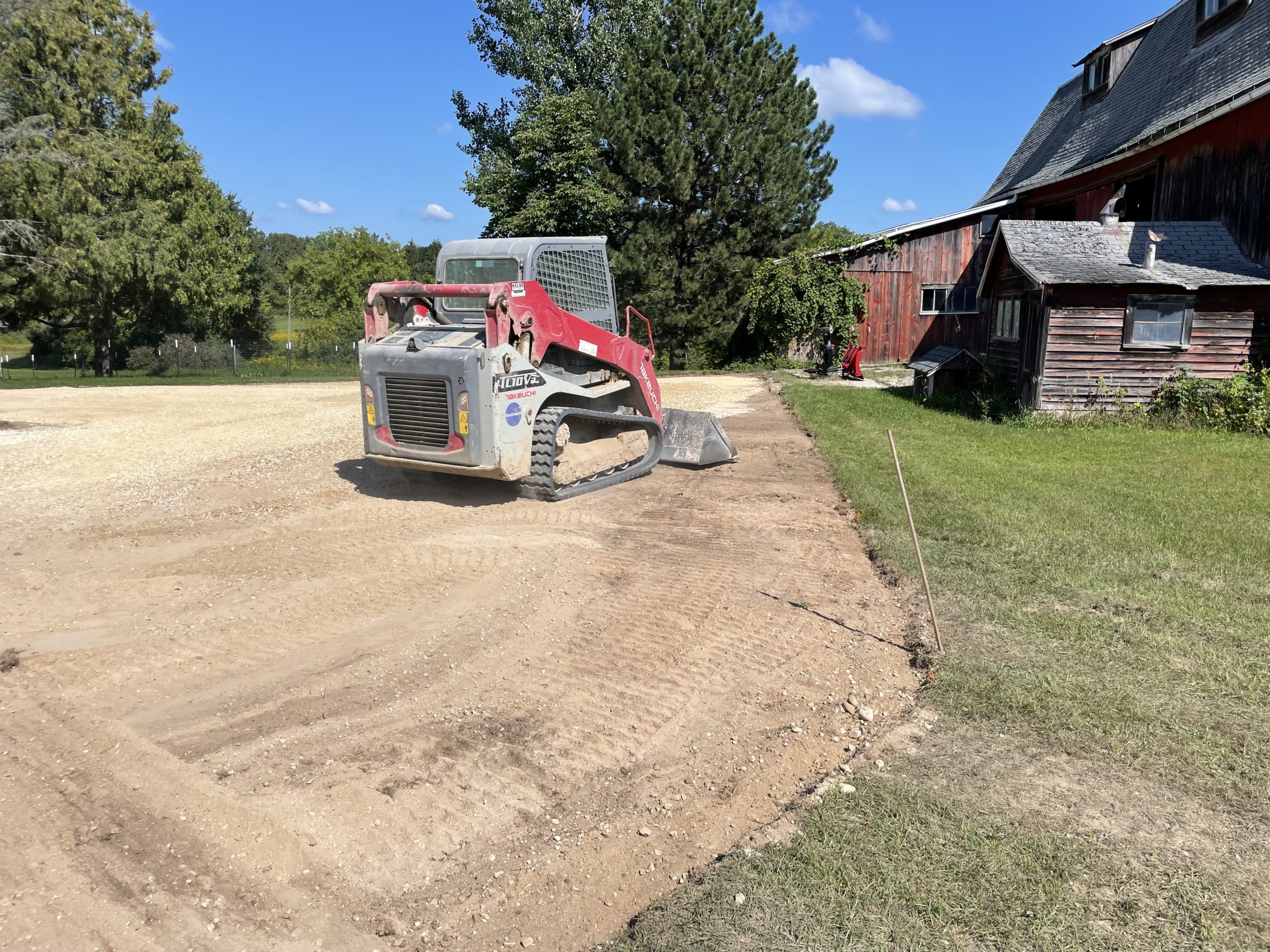
Soft spots in yard or parking lot? Learn causes of sinkholes, warning signs, and repairs. Act now and protect your property with a fast, professional inspection.
Why Soft Spots in Yard and Parking Lots Should Never Be Ignored
If you have noticed soft spots in yard areas or sudden dips in a parking lot, it is more than just a cosmetic issue. Soft ground, depressions, or voids form when soil loses support. That can happen for many reasons, from water problems to failing utilities. Left alone, these spots tend to grow. You might see standing water, tripping hazards, tire ruts, or even a sinkhole. The good news is most soft spots and small sinkholes can be fixed with the right plan and expert work.
At Masterwork Construction, we solve these issues every week across southeastern Wisconsin. Our team is based in Grafton and serves Ozaukee, Milwaukee, Waukesha, and Washington counties. Since 2015, we have combined modern equipment with skilled operators to stabilize sites, repair drainage, replace failed soils, and rebuild parking lot subbases the right way. This guide explains the common causes of soft spots in yard and parking lots, how to spot early warning signs, what to do first, and proven repair options.
What Counts as a Soft Spot or Sinkhole
A soft spot is an area where the soil does not support weight like it should. You feel squish underfoot, see footprints that sink deeper than nearby ground, or notice tire depressions that do not rebound. A sinkhole is a more serious void that opens when material below the surface is removed or collapses. In both cases, the surface you see is only part of the story. The key question is why the ground is losing support.
Common Causes of Soft Spots in Yard and Parking Lots
Poor Drainage and Surface Water Runoff
Water is the most common cause of soft spots in yard and paved spaces. If grading directs water toward a lawn depression or the edge of a parking lot, the soil stays saturated. Saturated soils lose strength. Over time, fines wash away and a void forms. Downspouts that discharge near the foundation or onto a driveway or lawn make the problem worse. Low spots where water pools after rain almost always become softer over time.
Leaking or Broken Underground Pipes
Storm sewer lines, culverts, water service lines, and irrigation pipes can leak. A steady leak erodes the soil that supports the surface. You might notice a wet area when the rest of the yard is dry, or a pothole forming above a pipe path. In parking lots, collapsed corrugated metal pipes are a frequent cause of sudden sinkholes near inlets.
Decaying Organic Material
If a tree stump, roots, buried brush, or peat was left beneath fill dirt, it can decay and shrink. As that material breaks down, voids appear and the surface settles. This is a common reason for soft spots in yard areas where trees were removed or new lawns were installed over topsoil with debris mixed in.
Buried Construction Debris or Trash
It is more common than you think. Loose bricks, concrete chunks, wood, or trash buried on a site eventually shifts and creates voids. Wood rots and collapses. Air pockets between debris settle. The result looks like a sinkhole, but the root cause is poor fill practices. Masterwork Construction often uncovers debris pits while correcting soft areas on older properties.
Improperly Compacted Fill
When new soil is placed without proper compaction in thin lifts, it settles under its own weight or when saturated. Yards built up with loose topsoil, or parking lots built over a poorly compacted subbase, tend to develop soft spots and rutting. Good compaction practices and testing during construction prevent this, but many older areas were built without modern standards.
Karst Geology and Natural Sinkholes
Parts of eastern Wisconsin are underlain by dolomite bedrock that can dissolve over time. That creates voids known as karst features. While not as common as in southern states, natural sinkholes do occur in Ozaukee and Washington counties. If you notice recurring collapses or deep, circular holes with no obvious water or utility cause, karst may be a factor. A professional assessment is important in these cases.
Animal Activity and Burrowing
Smaller soft spots in yard settings can come from burrowing animals. Cavities from groundhogs or moles weaken the surface. Those spots usually feel hollow and may collapse when stepped on. While this cause is less serious than drainage or pipe problems, it still needs repair to restore support.
Freeze-Thaw Cycles
In Wisconsin, freeze-thaw cycles expand and contract soils. If drainage is poor, fine particles migrate during thaw and leave behind weaker zones. Parking lots show this as alligator cracking and potholes. Yards show it as spongy ground in spring that never seems to firm up.
Warning Signs You Should Watch For
- Soft spots in yard that stay wet longer than surrounding ground
- Shallow depressions or new low spots after heavy rain
- Tire ruts or footprints that sink unusually deep
- Standing water near downspouts or patio edges
- Cracks forming in asphalt or along curb lines
- Settling around storm inlets, manholes, or catch basins
- Unexplained wet patches during dry weather
- Gurgling sounds or soil movement near utility lines
- Grass that appears greener in one band, which can indicate a leak below
What To Do First If You Notice a Soft Spot
- Keep people and vehicles off the area. Roping it off is smart.
- Check for obvious water sources. Look at gutters, downspouts, and nearby sprinklers.
- Document the spot. Take photos and note changes after rain.
- Call 811 before any digging. Utility locates reduce risk of hitting lines.
- Contact a professional earthwork contractor to inspect. Masterwork Construction can assess cause and recommend a safe plan.
If the ground is collapsing rapidly, if you smell gas, or if the spot is near a building foundation, call your utility provider and local authorities right away. Safety comes first.
How Professionals Diagnose Soft Spots and Sinkholes
Finding the cause is the key to a lasting fix. At Masterwork Construction, our team follows a structured approach to evaluate soft spots in yard areas and parking lots.
- Site walk and probe: We use a probe rod to feel for voids and define the weak area.
- Elevation check: Slight changes in grade can direct water and create soft zones.
- Water test: We look for signs of poor drainage or infiltration paths.
- Utility review: We map known lines and may recommend a camera inspection of storm or sanitary pipes.
- Test excavation: A small, careful test cut reveals soil layers, debris, or wet zones.
- Subgrade assessment: In paved areas, we proof-roll to locate weak subbase zones.
This process leads to a clear plan. Sometimes the fix is as simple as drainage grading. Other times, it requires pipe repairs, undercutting, and rebuilding the subgrade with proper materials and compaction.
Repair Options for Soft Spots in Yard
Surface Grading and Drainage Improvements
Many soft spots improve once water is redirected. We regrade to create positive slope away from structures and low spots. Downspout extensions, swales, or a French drain can move water to a safe discharge point. Good drainage keeps soils strong year-round.
Excavate and Replace Weak Soil
For localized soft spots in yard areas, we remove organic or saturated soil until reaching firm ground. We then rebuild using crushed stone or dense graded aggregate for a base, followed by engineered fill in compacted lifts. A layer of topsoil and new sod or seed finishes the surface. Compaction at the right moisture content is essential. Without it, the problem returns.
Remove Buried Debris or Organics
If testing reveals buried wood, construction debris, or decaying stumps, we remove it and replace with clean structural fill. This eliminates future voids and delivers a stable lawn.
Address Leaks or Broken Lines
When a pipe is the culprit, the repair starts with fixing the pipe. That may include replacing sections of corrugated metal with reinforced concrete pipe, sealing joints, or updating failing drain tile. Once watertight, we rebuild the soil and surface.
Stabilizing Peat or Very Soft Soils
In rare cases with deep soft soils, we may use geotextile or geogrid to stabilize the area. This creates a reinforced platform that spreads loads and limits future settlement.
Repair Options for Parking Lots and Driveways
Full-Depth Patch and Subbase Reconstruction
For asphalt or concrete surfaces, a long-lasting fix usually means a full-depth patch. We sawcut a neat rectangle, remove pavement, undercut soft subbase, and rebuild with dense graded aggregate in compacted lifts. Geotextile or geogrid is added if the subgrade is poor. Then we install new asphalt or concrete and seal joints. This stops potholes from coming back in the same spot.
Pipe and Structure Repairs
Soft spots near inlets or manholes often trace to failing pipes or joints. We excavate, repair or replace the pipe, adjust structures, and backfill with flowable fill or compacted aggregate to restore support. This addresses both the surface defect and the source.
Chemical Grouting or Slab Lift for Select Cases
In some situations, pressure grouting can fill voids under concrete slabs and restore support. This works best where there is a defined void and the surface is intact. It is not a cure for ongoing water or drainage problems, so we only recommend it when the underlying cause is fixed.
How to Prevent Soft Spots From Returning
- Keep gutters clean and extend downspouts 6 to 10 feet away from foundations and lawns.
- Maintain positive grading around buildings and pavement edges.
- Seal pavement cracks and joints to keep water out of the subbase.
- Schedule periodic camera inspections of storm sewer and culverts.
- Avoid burying debris or organics when backfilling or landscaping.
- Use proper compaction methods for new fills and document density tests.
- Direct sump pump discharge to a stable outlet, not onto lawns or driveways.
- Watch for early signs of settlement and address them before they grow.
When to Call a Professional
Try a DIY fix only for very small soft spots in yard areas where the cause is obvious, like removing a small patch of peat or extending a downspout. Call a professional like Masterwork Construction when:
- The area keeps growing or reappears after rain.
- There is standing water or active erosion.
- You suspect a broken pipe or see issues near a storm inlet.
- The soft spot is under a driveway, parking lot, or near a building.
- You find buried debris or smell foul odors from underground lines.
Why Property Owners in Southeastern Wisconsin Choose Masterwork Construction
Masterwork Construction is a local, professional earthwork company headquartered in Grafton. Since 2015, we have helped homeowners, businesses, and municipalities across Ozaukee, Milwaukee, Waukesha, and Washington counties solve tough site problems with skill and precision. Our services include excavation, grading, stormwater utility solutions, mechanical demolition, gravel driveway installation, pond development, roadway construction, and mass excavation. We also provide complete commercial and residential site development with value engineering to optimize cost and efficiency.
Our team uses modern equipment and proven methods to identify the source of soft spots in yard and parking lot areas. We fix the root cause and rebuild the area to last. Whether the job calls for a small test excavation at a home or a full-depth patch with subbase reconstruction on a commercial site, we bring the same focus on safety, quality, and communication.
We also handle related needs that often come with soft ground repairs. That includes installing underground water retention, repairing storm sewer piping, creating swales and ditches for drainage, clearing land and stripping topsoil, and recycling pavement. With Masterwork Construction, you get a single partner who can diagnose, repair, and prevent future problems.
Frequently Asked Questions
Are soft spots and sinkholes covered by insurance?
It depends on your policy and the cause. Many standard policies exclude earth movement. Sudden events linked to a covered peril may qualify. Pipe leaks might be considered if tied to a covered system. Ask your insurer and document everything with photos. We can provide inspection notes and estimates to support your claim.
How fast should I act?
Move quickly. Water and traffic make soft spots worse. A small repair today costs less than a major reconstruction tomorrow. If you see rapid changes or a hole forming, block off the area and call a professional right away.
What does it cost to fix soft spots in yard or parking lots?
Costs vary based on cause and size. A small yard spot that needs undercut and proper fill might be a modest one-day job. A parking lot with pipe failure or widespread subbase issues can be more. After a site visit, Masterwork Construction provides a clear scope and price so you can make an informed decision.
Can I just fill the hole with topsoil?
Filling a void with loose topsoil rarely works. It settles and often traps water. The right fix usually includes removing weak material, installing compacted aggregate, addressing drainage, and then adding topsoil on top.
Is southeastern Wisconsin at risk for natural sinkholes?
Natural sinkholes are less common here than in some states, but they do occur in areas with dolomite bedrock and karst features. If you suspect a natural sinkhole, an experienced earthwork contractor and, in rare cases, a geotechnical engineer should evaluate.
Real-World Examples of Repairs
Residential Yard With Persistent Soggy Spot
A homeowner in Ozaukee County had a soft area near a patio that stayed wet for days. Our inspection traced water back to short downspouts and a low grade toward the patio. We extended downspouts, regraded the slope, undercut the soft zone, installed a compacted aggregate base, and restored with topsoil and sod. The area now sheds water and the lawn stays firm.
Commercial Parking Lot Sinkhole by an Inlet
A Milwaukee business saw a sudden depression by a storm inlet. Our crew discovered a deteriorated corrugated metal pipe. We replaced the damaged section with reinforced concrete pipe, set a new base, backfilled with flowable fill and aggregate, then patched the asphalt. The inlet now drains correctly and the subbase is stable.
Your Next Step
If you are noticing soft spots in yard areas, pavement depressions, or standing water that never goes away, it is time to get expert help. Masterwork Construction will inspect your property, identify the cause, and give you a straightforward plan and estimate. We stand behind our work and focus on long-term solutions, not band-aids.
Call Masterwork Construction at 414-762-7000 to schedule an inspection, or visit our website to learn more about our excavation, grading, stormwater, and site development services. We are ready to help you protect your property and restore solid ground that lasts.
Key Takeaways
- Soft spots in yard and parking lots usually result from water problems, weak fill, buried debris, or failing pipes.
- Early warning signs include squishy ground, standing water, new depressions, and cracking pavement.
- A lasting repair fixes the cause first, then rebuilds the subgrade with proper materials and compaction.
- Good drainage, sealed pavement, and smart grading prevent most future issues.
- Masterwork Construction serves southeastern Wisconsin with professional inspections and durable repairs.