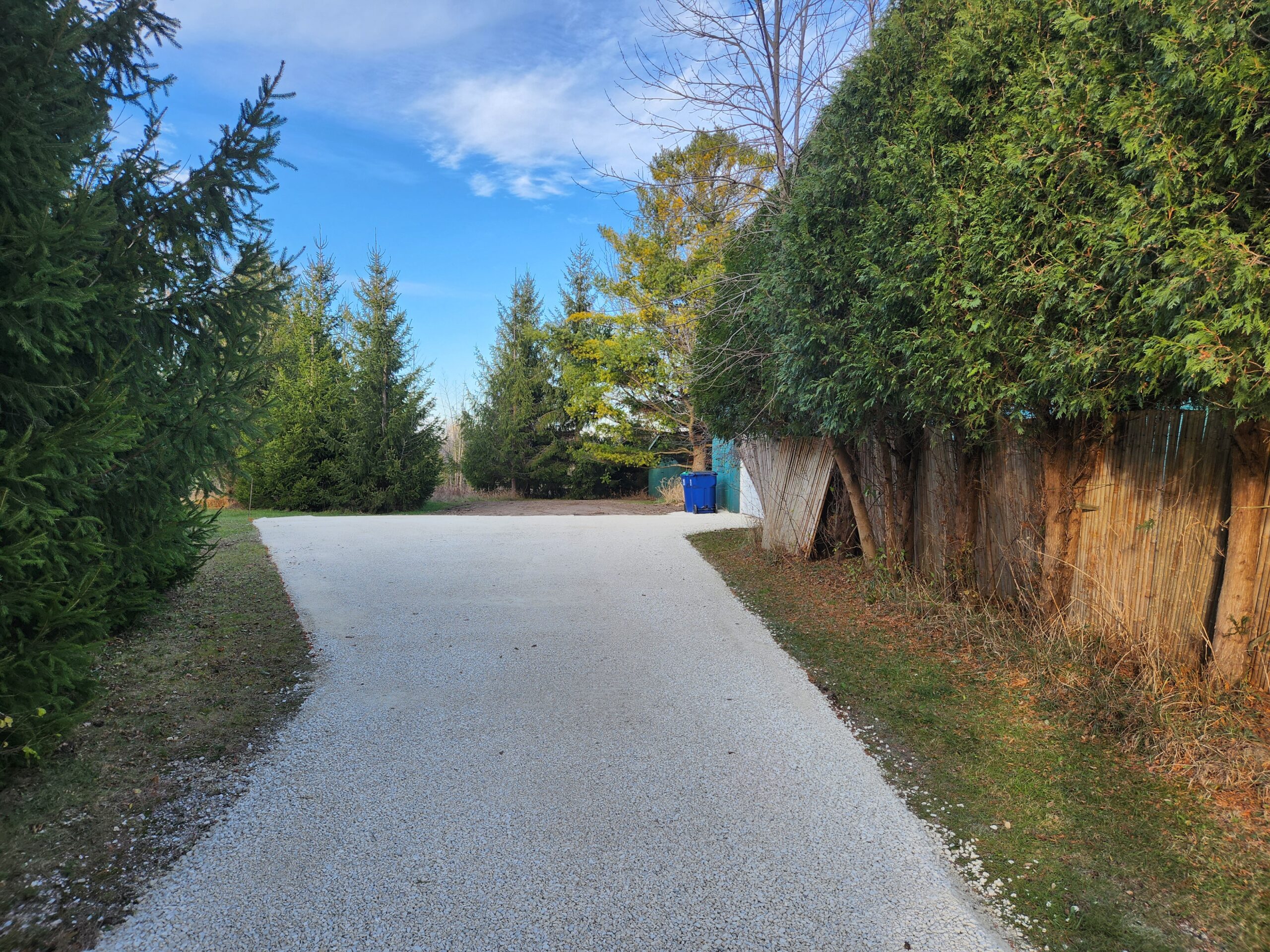
Why grading matters for hard surfaces
What grading actually does
Grading shapes the ground so water flows away from your home, building, and paved areas. With the right slopes, water drains to lawns, swales, ditches, or inlets. With poor grading, water sits, soaks into the base, and pushes on pavement as the ground freezes and thaws. Good grading protects your investment and keeps people safe as they walk or drive on your property.
How water moves on your site
Water follows the path of least resistance. It runs downhill, collects in low spots, and looks for gaps to enter. On a driveway, water should run away from the garage and toward a safe outlet. In a parking lot, water should reach catch basins without crossing walk paths. On walkways, water should not pond or flow toward buildings. Property grading services shape and fine tune these paths so every drop goes where it belongs.
Signs of improper grading around driveways, parking lots, and walkways
Driveways
- Puddles that linger more than a day after rain or snowmelt
- Water running toward the garage or foundation
- Ruts forming along tire paths on gravel driveways
- Heaving or depression near the apron by the garage
- Cracks that spread after winter
- Moss, algae, or dark staining that signals constant moisture
Parking lots
- Ponding near the center or alongside curbs
- Alligator cracking and soft spots that pump water when driven over
- Catch basins set lower than the pavement or surrounded by birdbaths
- Ice sheets in winter due to standing water
- Wheel rutting in lanes with heavy traffic
- Premature raveling of asphalt or spalling of concrete panels
Walkways
- Trip hazards from settled slabs
- Water draining toward steps, stoops, or door thresholds
- Surface slime or mildew that makes paths slippery
- Soil washing off nearby beds and streaking the concrete
- Ice patches that return even after shoveling
How improper grading damages each surface
Driveways
Poor driveway grading allows water to sit and infiltrate the base layer. Saturated base loses strength, leading to cracking and patchy settlement. In winter, trapped water freezes, expands, and lifts pavement. When it thaws, it leaves voids, which causes more cracking and potholes. For gravel driveways, improper grading creates channels that direct runoff down the wheel paths. Those channels deepen with each storm and each pass of a tire. Over time, the gravel thins, fines wash out, and the driveway becomes rough and uneven.
Parking lots
Large paved areas magnify grading errors. A slight dip can hold hundreds of gallons of water. When water ponds, traffic pushes it into the asphalt or concrete through tiny cracks. The base becomes saturated and begins to pump under load. Asphalt starts to crack and ravel. Concrete panels rock and break at joints. If the lot drains toward a building, foundations and lower level entries are at risk. Standing water near inlets also attracts debris that clogs the system, which increases ponding after the next storm.
Walkways
Improper walkway grading often shows up as settlement near stoops and steps. Water that flows toward an entryway can seep under slabs, carry fines away, and create voids. Slabs tip or sink, and trip hazards form. In winter, those areas freeze quicker, which adds slip risk. If slopes exceed accessibility standards, users with mobility devices may struggle. A well graded path has a gentle cross slope to shed water without exceeding ADA guidelines.
Common grading mistakes we fix in Wisconsin
- Driveway aprons pitched toward the garage or house
- Parking lot crowns too flat or reverse sloped lanes
- Walkways with no cross slope, causing ponding
- Insufficient swales or poorly placed inlets
- Subgrade left uncompacted or uneven before paving
- Downspouts discharging onto pavement instead of into drainage
- Landscape beds higher than adjacent pavement, trapping water
- Fill placed over topsoil, which settles and creates dips
The right way to grade these surfaces
Driveways
Good driveway grading starts at the foundation and works out. The area near the house should slope away at about 5 percent for the first 5 to 10 feet. The driveway surface should have a steady fall toward the street, ditch, or a designed swale. For long driveways, a gentle crown or a slight cross slope helps shed water to the sides. Gravel driveways need shaping with a defined crown and the right base aggregate so fines lock in place. Property grading services from Masterwork Construction set these slopes with precision so water moves off quickly without creating ruts or erosion.
Parking lots
Parking lots need a thoughtful drainage plan. A crown down the center with 1.5 to 2 percent slope to each side works well for many lots. If the lot is large, break it into drainage areas and set inlet elevations to collect water before it ponds. Avoid cross slopes that push water across walk paths or toward entrances. In cold climates, keep water off high traffic areas where ice can form. Our crews at Masterwork Construction use laser guided equipment to hit target elevations and maintain consistent slopes through transitions, islands, and curb returns.
Walkways and ADA considerations
Walkways perform best with a slight cross slope of about 1 to 2 percent. This is enough to shed water but gentle enough for comfortable use. Keep water moving away from thresholds and steps. Where grades are steep, introduce landings and switchbacks rather than long, steep runs. Our property grading services take accessibility into account so your paths are safe, durable, and comfortable for every user.
Drainage tools that protect your hard surfaces
- Swales to carry water along the edge of driveways and lots
- Curb and gutter to direct water to catch basins
- Catch basins and yard inlets set at the right elevation
- Underdrains to relieve groundwater in weak soils
- French drains to intercept water along slopes
- Channel drains at garage doors or entry thresholds
- Rain gardens or detention basins to slow and store runoff
- Underground retention systems for sites with limited space
Soil and base preparation matter as much as slope
Compaction and proof rolling
Even with perfect slopes, a weak subgrade will fail. Proper compaction creates a solid platform for your base and pavement. Proof rolling identifies soft spots that need removal or stabilization. At Masterwork Construction, we compact to project specs and use proof rolling to find and fix weak areas before paving. This reduces settlement and keeps surfaces smooth.
Stabilization, fabrics, and base materials
Some soils hold water and lose strength, especially in southeastern Wisconsin. In these cases, stabilization with lime or cement, along with geotextile fabric, can improve support. A well graded base aggregate with the right fines content locks together under compaction. For gravel driveways, we use dense graded base topped with a durable surface aggregate. For parking lots and walkways, we match the base thickness and material to the traffic and soil conditions. These choices are part of our property grading services and are tailored to each site.
How Masterwork Construction approaches property grading services
Masterwork Construction is a professional earthwork contractor based in Grafton, Wisconsin. Since 2015, our team has delivered excavation, grading, stormwater utility solutions, mechanical demolition, gravel driveway installation, pond development, roadway construction, and mass excavation across Ozaukee, Milwaukee, Waukesha, and Washington counties. We pair modern equipment with experienced craftsmen to deliver precise, long lasting results. Our culture values safety, integrity, and clear communication.
Our step by step process
- Assessment and survey. We walk the site, check slopes, test soils, and review drainage paths during dry and wet conditions.
- Design and value engineering. We set target elevations, choose drainage features, and size base materials to match your budget and performance goals.
- Earthwork and grading. We cut high spots, fill low spots, compact the subgrade, and shape swales and crowns with laser guided equipment.
- Drainage installation. We place underdrains, catch basins, and pipes, then test them to confirm flow and capacity.
- Base construction. We install and compact base materials in lifts to the specified thickness and density.
- Pavement or surface placement. We coordinate with your asphalt or concrete schedule, or place and compact gravel for driveways and paths.
- Quality checks. We verify slopes, spot check compaction, and water test for flow before final handoff.
- Maintenance plan. We share simple care tips to keep drainage clear and surfaces performing at their best.
Cost of fixing grading vs ignoring it
Fixing grades before paving is always cheaper than repairing damage afterward. Adjusting slopes and improving base during construction costs less than ripping out settled pavement or replacing cracked panels. Ignoring grading issues can lead to foundation damage, flooded basements, and repeat pavement failures. A short site visit from Masterwork Construction can reveal which changes will bring the best return. Our property grading services help you invest wisely by solving root causes rather than treating symptoms.
When to call Masterwork Construction
Situations that need quick attention
- Water flows toward your home, garage, or building
- Ponding lasts more than 24 hours after rain
- Ice forms in the same spots every winter
- Slabs have settled and created trip hazards
- Cracks and potholes return soon after repairs
- Downspouts discharge onto a driveway or walkway
- New construction needs a grading plan and stormwater layout
If any of these sound familiar, call 414-762-7000 to schedule an assessment. Masterwork Construction provides clear recommendations, transparent pricing, and a plan that fits your needs. From residential driveways to commercial parking lots and campus walkways, our team has the tools and experience to get the grades right the first time.
Frequently asked questions about property grading services
How much slope do I need?
For most paved areas, a slope between 1 and 2 percent is enough to move water without causing discomfort for users. Near buildings, the first 5 to 10 feet should slope away more, usually around 5 percent. Every site is different, so we confirm slopes based on soil, traffic, and drainage features.
Can I fix ponding without replacing the whole driveway or lot?
Often yes. Milling, spot regrading, or installing a channel drain can solve isolated ponding. When the base is weak or the subgrade has settled widely, larger repairs may be needed. Our assessment will explain the most cost effective path.
What if my soil is poor?
Poor soils can be stabilized or bridged. Geotextile and geogrid improve support, and chemical stabilization increases strength. With the right approach, even weak soils can support long lasting pavement.
Do you work on gravel driveways?
Yes. We regrade, rebuild crowns, add the right aggregate, and address drainage so gravel stays in place. We also install culverts and swales where needed to manage runoff.
What areas do you serve?
Masterwork Construction serves southeastern Wisconsin from our headquarters in Grafton. We work throughout Ozaukee, Milwaukee, Waukesha, and Washington counties on residential and commercial projects.
Maintenance tips to keep drainage working
- Keep inlets, channel drains, and gutters clear of leaves and debris
- Redirect downspouts into drains or away from pavements
- Fill edge voids along pavement to prevent water infiltration
- Repair cracks promptly to block water from reaching the base
- After winter, sweep sand and check for new low spots
- Regrade gravel driveways each season to restore crown
These simple steps help your grading do its job. If issues return, a professional review can reveal deeper causes.
Why choose Masterwork Construction
Our team delivers more than a smooth surface. We deliver a strong system that lasts. You get precise grading, properly built bases, and drainage that fits your site. We blend modern technology with craftsman skill to produce consistent results. Because Masterwork Construction also performs excavation, stormwater utility work, mechanical demolition, roadway construction, and site development, your project benefits from a complete approach. We can handle everything from clearing and topsoil stripping to final paving and restoration. That means one accountable partner and a smooth schedule.
Protect your investment with a pro grading assessment
Hard surfaces fail when water wins. The best way to stop that is with smart grading and strong base support. If you see ponding, cracking, or settlement, do not wait until the next storm or the next freeze. Masterwork Construction offers property grading services that solve problems at the source. Call 414-762-7000 to speak with our team or reach out through our website. We will review your site, explain what is happening, and build a plan that fits your goals and budget. With the right grading, your driveway, parking lot, and walkways will look better, last longer, and stay safer in every season.