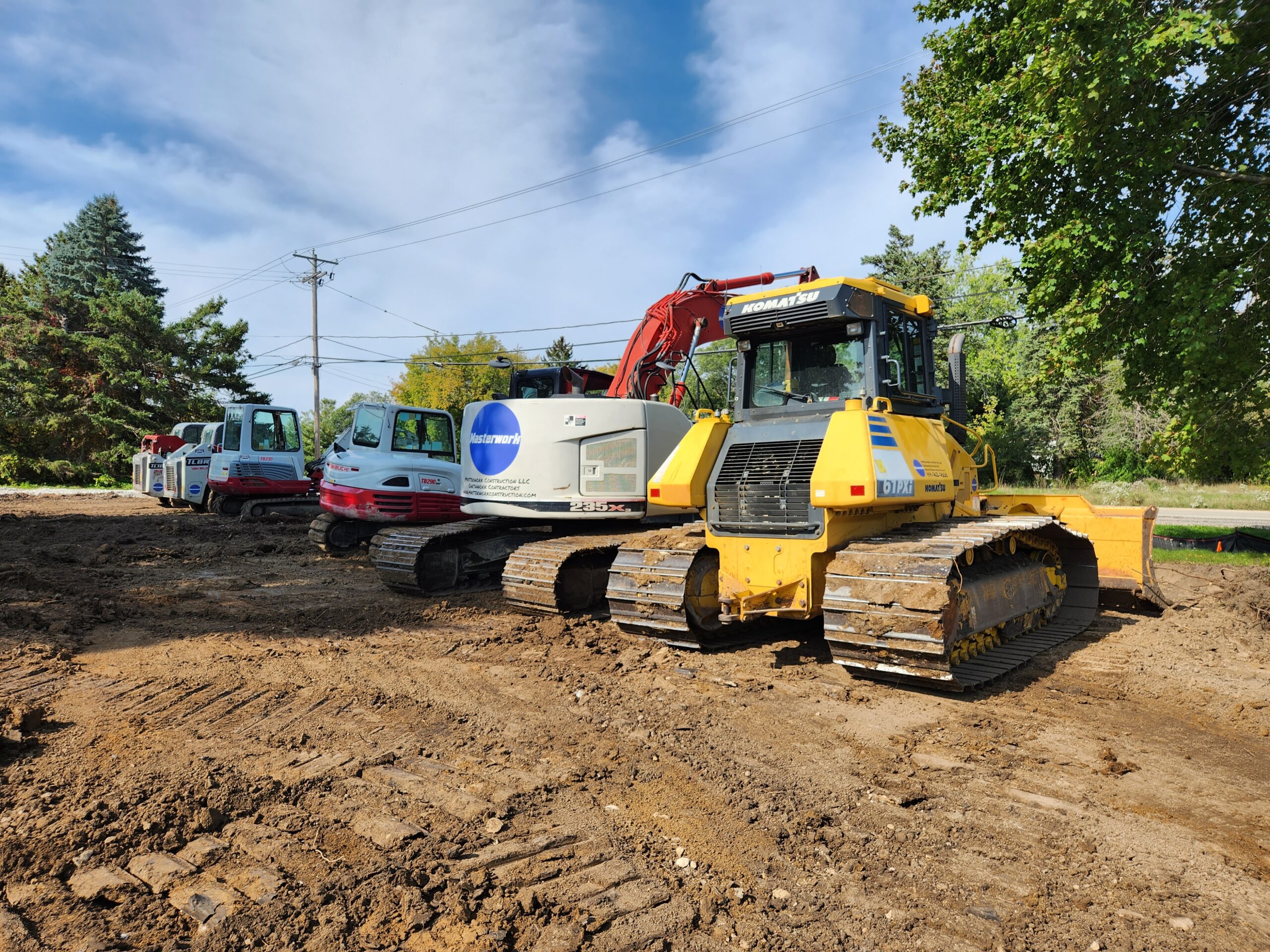
Not sure if your property needs excavation or just grading? You are not alone. Many homeowners and property managers in southeastern Wisconsin wonder where to start when they see standing water, sinking spots, or uneven ground. This guide explains excavation vs grading, the signs to watch for, cost and time basics, drainage clues, and how to decide what you really need before making a call. If you want a professional opinion, Masterwork Construction is ready to help with clear advice and a smart plan that fits your site and budget.
Excavation vs Grading: What They Mean and Why It Matters
What is excavation?
Excavation is the controlled removal of soil or rock to create space or bring the site to a deeper level. Think basements, frost footings, trenches for utilities, pond basins, and removing buried debris. Excavation is about going down with purpose. It often involves shoring, hauling, compaction, and safety planning. Masterwork Construction handles excavation for residential and commercial projects, from basements and additions to mass excavation for large developments.
What is grading?
Grading shapes the surface of the land at or near the existing level. It sets slopes for drainage, smooths bumps and ruts, prepares pads for sheds and garages, and fine tunes the top layer before paving or planting. Grading focuses on proper elevation and pitch so water flows away from structures and traffic areas. Masterwork Construction grades everything from driveways and yards to parking lots, roadways, and athletic fields.
How excavation and grading work together
Most sites use both. Excavation sets the rough depth or cuts out problem materials. Grading finishes the surface with the right slopes and elevations. For example, a new garage may need excavation for frost footings, then fine grading to create a smooth pad and proper drainage around the slab.
Quick Decision Guide: Do I Need Excavation or Just Grading?
Use the list below to match common site symptoms with likely solutions. This gets you close to an answer before you call anyone.
- Water pooling away from the house after rain: Grading to reshape surface flow. Possibly add a shallow swale.
- Water collecting against the foundation: Regrading around the house and downspout extensions. If slope is too high against the wall or the structure is below street level, limited excavation and drainage upgrades may be needed.
- Uneven yard with bumps and dips less than 8 inches: Grading and topsoil balancing.
- Large sinkhole, soft spots that collapse, or evidence of old buried debris: Excavation to remove unsuitable material, then backfill and grading.
- Basement addition, egress window, new foundation, or deep utility trenches: Excavation first, then grading to finish.
- Driveway rutting and washouts: Grading to reshape and compact, plus new gravel. If the base is weak, excavation of bad subgrade and a rebuilt base may be required.
- Standing water in a broad low area with clay soil: Grading to raise or redirect, sometimes a shallow excavation to install a culvert or a drain line to a proper discharge point.
- New pond or major pond rehab: Excavation with permits and soil management, then grading of banks.
- Parking lot or road reconstruction: Excavation if base is failing, grading for surface pitch, and proper compaction before paving.
Drainage Clues You Can Spot Before You Call
What to watch during rain
- Where does water travel first and where does it stop? Track the path from downspouts, driveways, and high points.
- Does water cross a sidewalk or driveway in sheets? That suggests surface grading adjustments are needed.
- If flow heads toward your house or garage, prioritize regrading around the structure.
What to check 24 to 48 hours after rain
- If puddles linger for days in summer, the slope may be flat or soils are compacted. Grading and soil conditioning can help.
- Persistent standing water near utilities, septic fields, or wells requires caution. Call a pro to evaluate. That may require excavation, drain tile, or both.
Foundation and hardscape red flags
- Mulch washing out along foundation walls: Often solved with regrading and splash blocks or extensions.
- Cracks or spalling in concrete near downspouts: Check for ponding. Minor grading may protect your slab.
- Frost heave or slab movement: Poor drainage and weak base are common causes. Plan for grading and possible excavation to replace base materials.
Yard and slope clues
- Steep slopes that erode: Add gentle terracing or a swale through grading. Severe erosion may need excavation, fabric reinforcement, or riprap.
- Shallow topsoil over hard clay: Scarifying and grading can create a better growth layer for turf and improve infiltration.
Cost and Time Basics in Southeastern Wisconsin
Every site is different, but some patterns hold true across Ozaukee, Milwaukee, Waukesha, and Washington counties. Masterwork Construction uses modern equipment and efficient methods to keep costs transparent and timelines realistic. The ranges below are rough and for education only. A site visit always produces a more accurate number.
Typical grading ranges
- Basic yard regrading near a home: Often one to three days of equipment time, plus topsoil and seed if needed.
- Gravel driveway reshape with added stone: One day for small drives, two to three days for long rural drives. Costs depend on length, depth, and stone type.
- Fine grading for a slab or shed pad: A day or two with laser-guided grading for precision.
Typical excavation ranges
- Small utility trench or sump discharge: A half day to two days, depending on length and obstacles.
- Basement excavation or large addition: Several days to a week, factoring haul off, backfill, and compaction.
- Pond excavation: Varies widely by size, soils, groundwater, and haul distance. Expect permitting and soil management planning.
Factors that swing cost and schedule
- Access: Narrow gates, fences, and trees slow work. Good access saves time.
- Soils: Heavy clay and wet subgrades often need stabilization or extra base.
- Water: High groundwater or springs may require pumping and drainage solutions.
- Haul off and import: Moving soil or stone long distances raises cost.
- Utilities: Locates, protection, and hand digging around lines affect time.
- Permits and inspections: Stormwater rules, erosion control, and roadway permits can add steps.
Wisconsin Soils, Frost, and Codes: What to Know
Soils in our region
Southeastern Wisconsin soils range from tight clay to loam and glacial till. Clay holds water and can rut or heave. Loam drains better but still needs the right slope. If your site shows slow drainage and soft spots, the fix may combine grading for pitch with excavation to replace weak subgrade in key areas.
Frost depth and foundations
Our winters drive frost deep into the ground. Footings for structures must extend below frost depth to prevent movement. That is excavation work. Once footings are placed, grading around the building ensures water sheds away and protects the foundation for the long term.
Permits, utilities, and erosion control
Before excavating, always call for utility locates. Some drainage changes, driveway tie-ins, or pond work may need permits. Sites near wetlands or waterways often require erosion control. Masterwork Construction handles stormwater plans, installs underground detention systems, and repairs storm sewers when needed.
Common Projects and Which Service They Need
- New basement or lower level expansion: Excavation first. Grading after backfill to shape the yard and drive.
- Frost footings for a garage or addition: Excavation to the correct depth, then grading for final elevations.
- Egress window wells: Excavation at the wall, proper drainage, then grading to keep water away.
- Pond creation or deepening: Excavation with soil testing and permits, then grading of banks for safety and stability.
- Gravel driveway refresh: Grading to reshape crown and shoulders, add stone, then compact. If base is mushy, excavate weak material and rebuild the base.
- Parking lot rehab: If pavement is cracked and base is fine, milling and fine grading may do. If base is failing, excavation and base replacement are required.
- Yard leveling for landscaping: Grading with topsoil balance, sometimes small excavation to remove high spots.
- Stormwater fixes: Often a mix of shallow excavation for drain lines and grading to set swales and positive pitch.
DIY Checks and Prep Steps to Save Time
- Walk your property in a steady rain and take photos of water paths and pools.
- Mark wet spots with small flags. Note where water enters and where it exits.
- Measure slopes with a level and a straight board. A quarter inch drop per foot often moves water away from structures. Around foundations, aim for more in the first few feet.
- Sketch a simple site map with house, driveway, low areas, and trees. Add notes on soils if known.
- List your goals. Faster drainage, smoother lawn, stable driveway, or structural excavation. Clear goals reduce guesswork.
- Gather utility information. Note gas, electric, water, and septic features. Always plan for locates before digging.
- Share your photos, map, and goals with Masterwork Construction. It speeds estimating and leads to stronger solutions.
Mistakes to Avoid and When to Stop DIY
- Moving soil without a plan for where water will go. You can fix a puddle and create a flood at the neighbor’s fence.
- Adding topsoil on top of hard clay without scarifying. The new layer can act like a sponge with nowhere to drain.
- Skipping compaction in driveway repairs. Loose base will rut in the first storm.
- Ignoring utility locates. It is unsafe and illegal to dig without them.
- Cutting too close to your foundation. That can undermine support and cause damage.
- Working wet subgrade. Heavy equipment on soft ground can make conditions worse.
Stop DIY and call a pro if you see buried debris, old stumps, or voids, if groundwater is present, or if water is entering your basement. Complex drainage that crosses property lines also calls for professional planning.
How Masterwork Construction Approaches Excavation vs Grading
Clear diagnosis, not guesswork
We start with your goals, site photos, and a walk of the property. We look at soils, slopes, and water paths. Then we explain the difference between excavation vs grading for your situation, and we outline a plan that balances performance and cost.
Modern equipment and precision
Masterwork Construction uses laser and GPS tools to set elevations, control depths, and shape accurate slopes. That means fewer surprises and a clean finish. Our team is trained and experienced in both residential and commercial earthwork.
Safety and utilities first
We coordinate locates, plan safe excavation, and protect existing structures. For stormwater upgrades, we install underground retention systems, repair storm sewer piping, and build stable swales that last.
Value engineering
We look for ways to reduce soil haul off, reuse suitable materials on site, and phase work to save time. Our goal is a durable result at a fair cost, backed by communication and integrity.
Case Snapshots from Southeastern Wisconsin
1. Grafton yard with stubborn puddles
A homeowner had standing water near a patio two days after storms. We mapped the low points, pulled back a few inches of topsoil, regraded the area with a gentle slope away from the house, and shaped a shallow swale to a safe discharge point. No deep digging required. The fix was grading with minor topsoil balancing and seed. The yard now drains within hours after heavy rain.
2. Waukesha gravel driveway that would not hold shape
Ruts kept returning after each storm. A quick test showed a soft base over clay. We excavated the weak layer, installed a geotextile fabric, placed a proper base stone, and graded a solid crown. After compaction, the driveway shed water correctly. This project needed both excavation to remove the bad base and grading to set the final shape.
3. Milwaukee commercial site expansion
A business needed more parking and better drainage. We performed mass excavation to balance cuts and fills, installed storm sewer and an underground retention system, then graded the lot and drive lanes for proper pitch. The project met local stormwater rules and delivered a smooth, durable surface ready for paving.
Frequently Asked Questions
How do I know if grading alone will fix my drainage?
If your site has gentle irregularities and the soil is stable, grading often solves surface water issues. Signs include shallow pooling that goes away within a day and no structural problems. When water is trapped by high edges or the yard is flat, grading can create a path to move water away.
When is excavation the only answer?
If you need a deeper structure like footings, basements, or ponds, excavation is required. It is also needed when you find buried debris, organic layers, or soft soils that cannot support traffic or structures. In those cases, we remove the unsuitable material and rebuild with stable base layers.
Do I need permits?
Many projects do not need permits, but some do. Work that affects public roadways, storm sewers, or wetlands can require approvals. Significant grading that changes drainage patterns may need review. Masterwork Construction can help you navigate permits and erosion control requirements.
Will grading ruin my existing lawn?
We aim to minimize disturbance. Some areas will be reshaped and reseeded. In many cases, we strip and stockpile topsoil, grade the subgrade for pitch, then replace topsoil and seed so the lawn fills in evenly.
What if I have clay soil?
Clay is common here and can work well with the right approach. The key is setting correct slopes, improving base layers where traffic occurs, and not trapping water. Sometimes we scarify, add select fill, or install a drain line to move water to a safe outlet.
Can you fix drainage without sending water to my neighbor?
Yes. The goal is to keep water on site or move it to approved discharge points like storm inlets or roadside ditches, following local rules. We design slopes and swales that control flow and avoid creating new problems.
Why Choose Masterwork Construction
Masterwork Construction is a professional earthwork company based in Grafton, Wisconsin, serving Ozaukee, Milwaukee, Waukesha, and Washington counties. Since 2015 we have delivered excavation, grading, stormwater utilities, mechanical demolition, gravel driveways, pond development, roadway construction, and mass excavation. We also handle commercial and residential site development with value engineering to optimize efficiency and cost.
Our crews combine modern equipment, new technology, and skilled craftsmanship to deliver precise results. Whether you need a simple yard regrade, a complex drainage upgrade, or full site development, we focus on safety, integrity, and communication. We build long term relationships by doing the job right the first time.
Next Steps: Get a Clear Plan for Your Property
Still weighing excavation vs grading? Start with the simple checks in this guide, then let us confirm the best path. Masterwork Construction will visit your site, diagnose the issues, and explain options in plain language. Call 414-762-7000 or reach out through our website to schedule a consultation. We serve southeastern Wisconsin with solutions that last and a smooth process from start to finish.