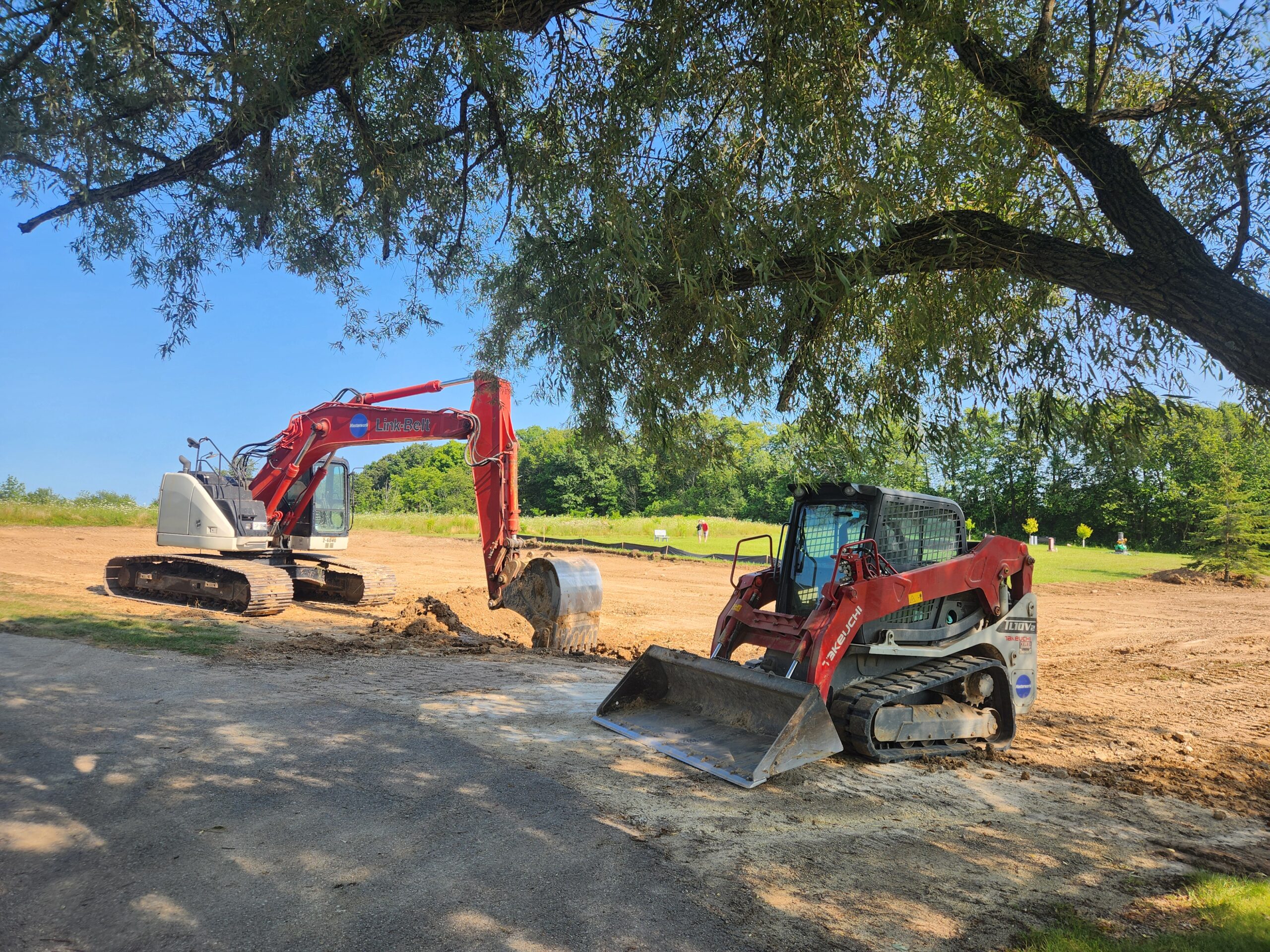
Driveway asphalt removal can feel like a big job, but with a clear plan, the right equipment, and smart safety steps, you can move from cracked pavement to a clean, stable site in a predictable timeframe. Driveway asphalt removal means cutting the pavement into sections, breaking it up, loading it out for recycling, and preparing the base for the next surface. This guide covers safe, cost-effective methods, realistic timelines, and signs you should bring in a professional. If you prefer a turnkey solution, Masterwork Construction serves southeastern Wisconsin with mechanical demolition, excavation, grading, and pavement recycling.
What Makes One Method Better Than Another?
The best way to remove an asphalt driveway is the approach that is safe, predictable, and efficient for your site conditions. That usually means mechanical removal using a skid steer or excavator with a breaker and bucket, combined with saw cutting at tie-in points and careful base evaluation. The goal is not just to tear out pavement. You need a clean subgrade with the right slope and drainage so your next surface lasts. In Wisconsin’s freeze-thaw cycles, the condition of the base and subgrade matters as much as the pavement itself.
When Should You Replace Instead of Patch?
Not all damage calls for full removal. But if your driveway has widespread alligator cracking, ruts, frost heaves, ponding water, or patches that do not bond, your money is better spent on replacement. A failing base or poor drainage will keep causing problems. If you see movement in the pavement or large soft spots after rain, full driveway asphalt removal and base improvement is usually the right call.
Prep Work Before Any Driveway Asphalt Removal
- Call 811 for utility locates. Private utilities like sprinkler lines or low-voltage lighting should be flagged too.
- Review permits. Some municipalities require permits for demolition or dumpster placement.
- Plan access and staging. Decide where trucks will load and where materials can be temporarily stockpiled without blocking traffic.
- Arrange disposal and recycling. Most asphalt can be recycled as reclaimed asphalt pavement at a local facility.
- Set up dust and debris control. Have water available for dust suppression and a plan to keep fragments off the street.
- Protect nearby structures. Use plywood or mats against garage doors, curbs, and walkways to prevent impact damage.
DIY vs Hiring a Pro
DIY Pros and Cons
DIY can make sense for small driveways if you already have a capable skid steer, breaker, and a way to haul debris. It can also be a fit if you only need to remove a thin overlay. The downside is the learning curve, the safety risk, and the time cost. Renting equipment and arranging disposal can erase much of the savings, and errors with the base or drainage can shorten the life of the new driveway.
Professional Removal Pros and Cons
Hiring a contractor reduces risk and compresses the schedule. A skilled crew will cut, break, load, and recycle the material while managing utilities, dust, and traffic control. Most importantly, a pro can diagnose base failures, correct grading, and set you up for a long-lasting replacement. The tradeoff is the labor cost, though efficient equipment and recycling often offset more than you expect. Masterwork Construction delivers turnkey driveway asphalt removal with excavation, grading, and stormwater solutions included, which helps prevent future failures.
The Professional Driveway Asphalt Removal Process
- Site walk and utility review. Confirm locates, identify drainage issues, and plan tie-ins where the driveway meets the street, curb, or garage slab.
- Saw cut edges. Use a concrete saw to create clean separation at the street, curb, sidewalk, or garage. This protects structures and leaves a straight joint for the next surface.
- Break the pavement. A hydraulic breaker on a skid steer or mini excavator fractures the asphalt into pieces. Thickness, age, and temperature affect how it breaks.
- Load and haul. Use a bucket to load broken asphalt into trucks for recycling. Keep loads free of soil to reduce tipping fees and maximize recycling value.
- Remove contaminated or failed base. If the base is pumping fines or holds water, excavate and replace with compacted stone. Address root intrusions and soft spots.
- Shape and compact the subgrade. Establish proper slope to direct water away from the house and toward approved drainage points.
- Install geotextile if needed. Over weak soils, a woven geotextile increases stability and keeps the base from mixing with the subgrade.
- Place and compact base stone. Use well-graded aggregate in thin lifts and compact each lift to spec. Test compaction to confirm density.
- Final cleanup. Sweep the street, clear stockpiles, and leave a stable platform ready for your next surface, whether that is new asphalt, concrete, or gravel.
DIY Method for Small Driveways
For a simple driveway under about 600 square feet with no structural issues, a basic DIY method can work if you plan carefully.
- Mark utilities and protect the garage, curbs, and nearby structures with plywood.
- Saw cut at the garage slab and the street or sidewalk.
- Use a rented breaker to open a starting trench, then work in rows. Lift pieces with a pry bar if you do not have a machine.
- Cut pieces small enough to load by hand. A 2 by 3 foot piece is easier to lift than a large slab.
- Load debris into a dumpster or trailer. Keep soil out to qualify for asphalt recycling rates.
- Rake the subgrade and check drainage with a string line or laser level. If you plan to reinstall a surface soon, place new base and compact with a plate compactor.
Stay alert to changing conditions. If you find thick layers of saturated base or see large voids and pumping fines, it is best to stop and call a contractor. Masterwork Construction can step in to correct base and drainage problems before they become costly.
Equipment That Works Best
- Skid steer or mini excavator with hydraulic breaker for fast fracturing.
- Bucket with teeth for prying sections and loading trucks.
- Walk-behind or ride-on saw for clean cuts at edges and joints.
- Plate compactor or small roller for base preparation.
- Water source and hose for dust control.
- Laser level or string lines for slope checks.
How Long Does Driveway Asphalt Removal Take?
Most residential driveways are removed in one working day by an experienced crew with the right equipment. Allow extra time for base repairs and grading. Typical timelines in southeastern Wisconsin are:
- Half-day to one day for removal and hauling on a standard two-car driveway.
- One to two additional days for base excavation, drainage corrections, and compaction if the base is weak or saturated.
- Weather buffer for rain or freeze-thaw conditions that can soften soils.
Cost Factors for Driveway Asphalt Removal in Wisconsin
Prices vary by access, thickness, haul distance, and base conditions, but these ranges can help with planning:
- Basic removal and haul off to recycling: often 2 to 4 dollars per square foot for average residential driveways.
- Saw cutting at garage and street edges: typically a small add-on per linear foot.
- Base undercut, geotextile, and stone replacement: highly variable depending on depth and area. Expect a separate line item for excavation and aggregate by ton.
- Restricted access, long hauls, or small projects: rates may increase due to mobilization and time on site.
A detailed site visit produces the most accurate estimate. Masterwork Construction provides transparent proposals with line-item pricing for removal, hauling, base work, grading, and replacement options.
What Happens to the Old Asphalt?
Asphalt is one of the most recycled materials in the United States. Your old driveway is typically crushed and screened to create reclaimed asphalt pavement that becomes part of new roadways and parking lots. Recycling reduces landfill waste and can lower disposal costs. Masterwork Construction supports pavement recycling through on-site crushing when feasible and by hauling to regional recycle yards.
Drainage and Base: The Real Keys to a Long-Lasting Driveway
Driveway asphalt removal is only half the story. The long-term success of your next driveway depends on what lies beneath. Here is what to watch:
- Slope away from structures. Aim for at least a gentle fall from the garage to the street to prevent ponding.
- Stable subgrade. Remove topsoil and organics. If clay is present, evaluate moisture and compaction carefully.
- Geotextile over weak soils. A woven fabric helps distribute loads and keeps stone from migrating.
- Right base thickness. Many homes in Wisconsin perform well with 6 to 10 inches of compacted aggregate for asphalt, depending on soil and traffic. Heavier vehicles may need more.
- Compaction testing. Confirm density to avoid future settlement and cracking.
Common Mistakes to Avoid
- Skipping utility locates. A hidden gas or electric line can turn a simple job into a dangerous one.
- Removing only the surface when the base is failing. New pavement over a bad base will not last.
- Hauling wet, contaminated loads. Dirt mixed with asphalt raises disposal costs and limits recycling options.
- Neglecting drainage. Even perfect pavement will suffer if water has nowhere to go.
- Rushing compaction. Thin, well-compacted base layers perform better than thick lifts that are not dense.
Regional Tips for Southeastern Wisconsin
Our climate adds a few wrinkles. Freeze-thaw cycles can push water through cracks and into the base, then expand, leading to more damage. It is wise to schedule removal and base work when soils are not saturated. Fall and late spring can be ideal. If you plan to install new asphalt soon after removal, coordinate crews so the exposed base is not left open through heavy rain. Masterwork Construction can help you stage removal, base work, and replacement to fit the weather window.
Why Homeowners Choose Masterwork Construction
Masterwork Construction is a professional earthwork company based in Grafton, Wisconsin, serving Ozaukee, Milwaukee, Waukesha, and Washington counties. Since 2015, our team has focused on precision, safety, and lasting value. For driveway asphalt removal, we bring the same heavy civil expertise we apply to roadways, parking lots, and site development. That means clean saw cuts, controlled demolition, careful base assessment, and smart drainage that protects your investment.
Our services include excavation, grading, stormwater utility solutions, mechanical demolition, gravel driveway installation, pond development, roadway construction, and mass excavation. We also provide on-site crushing and pavement recycling where appropriate. Whether your project is residential or commercial, we offer value engineering to optimize cost and performance. If you want a partner who can handle removal, base reconstruction, and the next surface, call Masterwork Construction at 414-762-7000 or reach out through our website.
Planning Your Next Surface After Removal
New Asphalt
Asphalt is flexible and can handle freeze-thaw better than many rigid surfaces. It needs a compacted base and correct slope. Consider a thicker lift where heavy vehicles park.
Concrete
Concrete delivers a crisp, long-lasting finish. It is less forgiving over weak soils, so base prep is vital. Make sure your drainage plan prevents water from running under slabs.
Gravel
Gravel can be a cost-effective, eco-friendly choice. With proper grading, confinement, and occasional top-up, it performs well. Masterwork Construction installs durable gravel driveways that balance cost and function.
Driveway Asphalt Removal Checklist
- Confirm 811 utility locates and mark private lines.
- Measure the driveway and plan saw cuts and tie-ins.
- Choose removal method and equipment based on thickness and access.
- Schedule dumpsters or trucking to a recycle yard.
- Set a dust and debris control plan.
- Inspect subgrade after removal and correct drainage.
- Place geotextile and new base where needed.
- Compact to spec and leave the site ready for the next surface.
FAQs About Driveway Asphalt Removal
Can I remove only the top layer and resurface?
If the base is sound and only the surface is oxidized or lightly cracked, milling or removing a thin layer and resurfacing may work. If cracks reflect base movement or there is rutting, full driveway asphalt removal with base repair is the better option.
What thickness is typical for residential asphalt driveways?
Many residential driveways have 2 to 4 inches of asphalt over 6 to 10 inches of compacted base. Actual thickness varies by site and traffic. Older driveways may have multiple overlays.
Is winter a good time for removal?
Removal can be done in cold weather, but frozen or saturated soils make base repairs harder. Spring through fall is ideal, especially if you plan to replace the surface soon after.
Do I need a permit?
Some municipalities require a permit for demolition, right-of-way work, or dumpster placement. Check local rules before you begin. A professional contractor can manage permits for you.
How do I keep costs down?
Plan efficient access for trucks, keep asphalt free of dirt for recycling, and schedule work during good weather. Address drainage and base issues during removal, not after new pavement is placed. Bundling removal, base work, and replacement with one contractor like Masterwork Construction can also reduce mobilization costs.
Get a Clear Plan and a Reliable Timeline
A successful driveway asphalt removal project protects nearby structures, handles utilities safely, and leaves you with a stable base and good drainage. If you want help from a contractor with the equipment, crew, and experience to do it right the first time, Masterwork Construction is ready to step in. From precise saw cutting and mechanical demolition to grading, stormwater solutions, and pavement recycling, we deliver a smooth process and a clean site. Call 414-762-7000 to discuss your driveway or send us a note through our website to start your estimate today.