Why Debris Management Matters
Demolishing a house is more than heavy machinery and rubble. What happens after the walls come down matters for safety, cost, and the environment. If you are searching for demolition contractors milwaukee and wondering how debris gets handled, sorted, and recycled, you are in the right place. Understanding the flow of materials helps you choose a responsible partner, plan your budget, and avoid surprises. At Masterwork Construction, we treat debris management as a core part of the job, not an afterthought.
Construction and demolition waste includes concrete, brick, wood, metal, asphalt shingles, drywall, soil, and more. Some materials can be salvaged or recycled. Others need special care due to hazards like asbestos or lead. The goal is simple. Keep as much material out of landfills as possible, protect people and water resources, and leave the site clean and ready for what comes next.
From First Break to Final Load: The Debris Journey
Pre-demolition Planning and Material Survey
Before the first machine touches the structure, a material survey identifies what is inside the home. This includes lumber, flooring, roofing, masonry, windows, and fixtures, plus any potential hazards. In Wisconsin, certain materials require licensed abatement before demolition can start. Proper planning speeds up removal, reduces contamination, and improves recycling success. Masterwork Construction builds debris plans into our schedule so crews know what to separate and how to handle it.
Safety Setup and Utility Disconnects
Utilities are disconnected. Erosion control and stormwater protections go in. Access routes are marked so trucks and roll-off containers can move safely. Dust control measures are prepared. Safety is not negotiable. The right setup protects workers, neighbors, and the surrounding environment from day one.
Structure Takedown and Source Separation
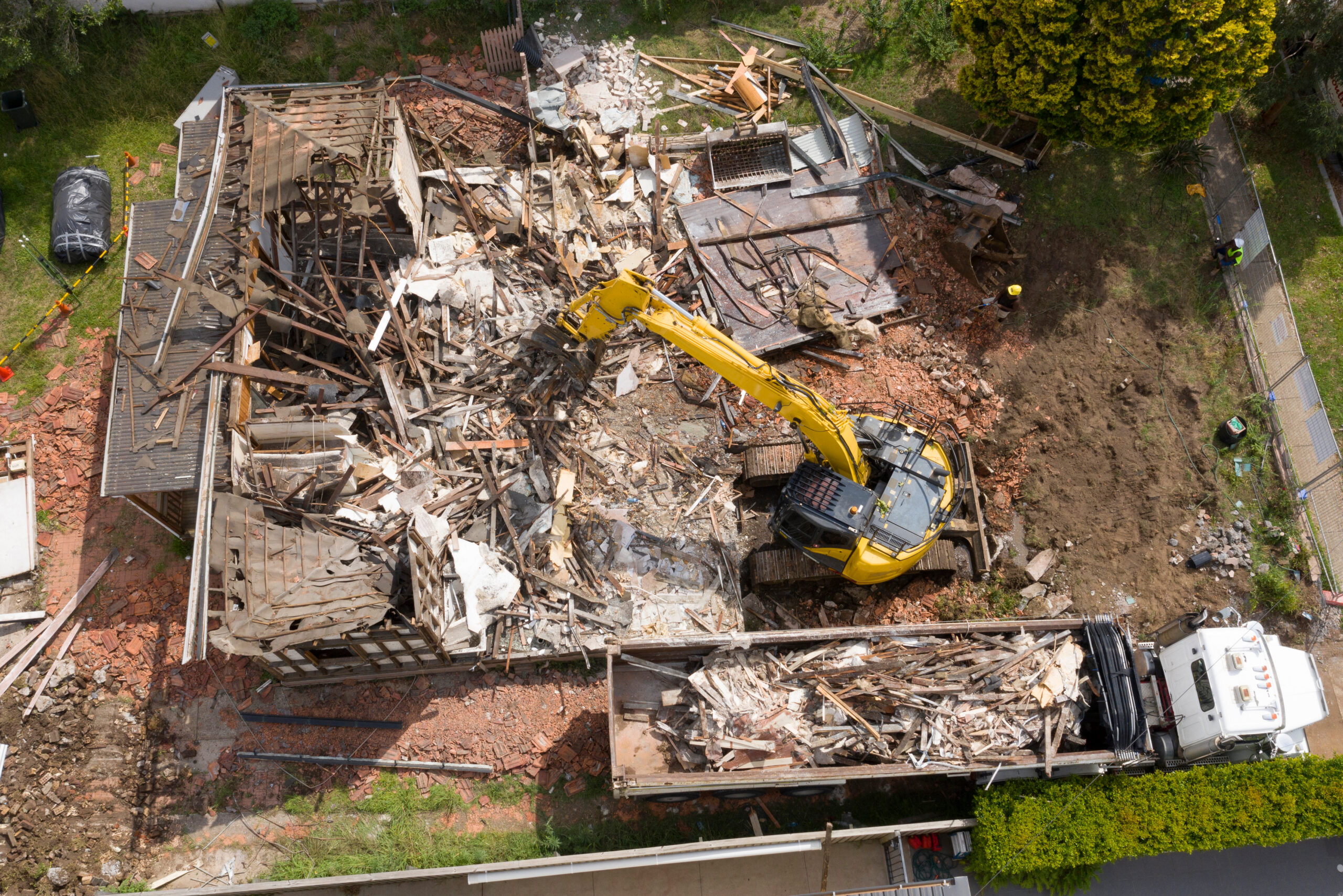
As the house comes down, crews separate material as early as is practical. This is called source separation. Clean concrete goes in one pile, metals in another, wood in another. Keeping materials clean and separate improves recycling rates and helps avoid extra landfill fees. On some projects, mixed debris is collected and sorted later at a specialized facility. The right approach depends on the site, schedule, and waste stream.
On-site Processing and Loading
Many projects benefit from on-site processing. Concrete and asphalt can be crushed on site for reuse as base course. Rebar is pulled with magnets. Lumber is cut to manageable lengths. These steps reduce trucking, save on disposal, and turn waste into useful products for the same project or future jobs. Masterwork Construction offers on-site crushing and pavement recycling that often lowers total project cost while reducing environmental impact.
Transportation to Recycling and Disposal Facilities
Once sorted and processed, debris moves to the right destination. Recyclables go to material recovery facilities, metal yards, or aggregate recyclers. Mixed debris may go to a transfer station, where it gets sorted further. Only non-recyclable or contaminated material is taken to a landfill that accepts construction and demolition waste. Each load is documented by weight and type. This record helps verify diversion rates and can support green building goals.
What Gets Recycled, Reused, or Disposed
Concrete, Brick, and Masonry
Concrete and brick make up a large part of demolition waste by weight. Clean concrete can be crushed and screened into aggregate. It becomes base for new driveways, parking lots, and roadways. Masonry can be crushed for similar uses. At Masterwork Construction, on-site crushing and stockpiling can turn old foundations into a cost effective base for the new build. This reduces trucking and keeps heavy materials out of landfills.
Metals
Steel beams, nails, aluminum siding, copper wiring, and appliances have strong recycling markets. Metals are valuable, even when mixed. Magnets and manual sorting pull metal from debris piles. Clean, separated metal often brings better pricing from scrap yards. Recycling metal saves energy compared to producing new metal and can offset part of your project cost.
Wood and Lumber
Dimensional lumber and heavy timbers may be salvageable for reuse. Historic flooring, beams, and trim can find a second life in remodels or custom projects. If reuse is not practical, clean wood can be chipped for mulch or used in biomass facilities where allowed. Painted or treated wood requires more care. Source separation helps protect reuse options and improves recycling potential.
Asphalt Shingles
Asphalt shingles can be processed into aggregate for road base and asphalt pavement mixes. The availability of shingle recycling depends on local markets and facility rules. When accepted, recycling shingles cuts disposal costs and supports circular use of petroleum based products. Masterwork Construction coordinates with local recyclers in southeastern Wisconsin to place shingle materials where they can do the most good.
Drywall and Plaster
Gypsum drywall can be recycled. The core becomes a soil amendment or new drywall feedstock where facilities exist. Clean separation is important because joint compound, paint, and moisture can limit options. Plaster may be more difficult due to lath and embedded materials. When recycling is not available, drywall goes to approved disposal sites. Dust control during handling is important for worker safety and site cleanliness.
Soil and Rock
Excavation often accompanies demolition, especially when removing a basement or regrading the lot. Clean soil and rock can often be reused on site for backfill or grading. When hauling is needed, material can be taken to approved fill sites or aggregate yards. Masterwork Construction specializes in excavation, grading, and stormwater utility work, which means we handle soil with precision and protect nearby waterways during the process.
Glass, Plastics, and Insulation
Windows, vinyl siding, and insulation have mixed recycling markets. Some glass and plastics can be recycled when clean and sorted. Insulation is more difficult due to fibers and adhesives. These streams are often landfilled unless a specialty recycler is available. Responsible demolition contractors document what is possible in your area and show how they made the most of each waste stream.
Hazardous Materials
Older homes can contain asbestos, lead based paint, mercury thermostats, refrigerants, and PCB containing components. These materials require licensed handling and strict chain of custody. Asbestos must be abated by certified professionals before general demolition. Refrigerants are captured by trained technicians. Mercury devices are safely removed and recycled. Masterwork Construction partners with licensed abatement teams and follows Wisconsin Department of Natural Resources guidelines to protect our crews and your community.
On-site Sorting vs Off-site Processing
There are two main strategies for managing debris. Source separation on site, or mixed collection with off-site sorting. Each has benefits. Many projects use a blend of both for the best outcome.
- On-site separation increases recycling rates by keeping materials clean and uncontaminated
- Off-site processing saves time on tight schedules and allows specialists to sort with advanced equipment
- A blended approach captures high value recyclables on site while sending mixed debris for further recovery
- Local markets, site size, and safety considerations guide the strategy on each job
As demolition contractors milwaukee property owners trust, Masterwork Construction evaluates the waste stream and selects the best plan for your schedule and budget. Our team coordinates roll-off containers, staging areas, and trucking to keep the site organized from start to finish.
Environmental Controls During Demolition
Debris handling is not just about where materials go. It is also about how they are handled on site. Dust control, stormwater protection, and noise mitigation keep the neighborhood and environment safe.
- Dust suppression with water sprays during active demolition and loading
- Silt fence, inlet protection, and stabilized entrances to control sediment
- Covered loads and staged haul routes to limit debris loss during transport
- Noise control through equipment selection and work hour planning
Masterwork Construction integrates these protections into our earthwork and stormwater utility services. We set the site up right, monitor conditions, and adjust as needed. That is part of our commitment to safety, integrity, and quality.
Where Does the Non-recyclable Debris Go?
Even with strong sorting and recycling, some material cannot be reused. Non-recyclable debris is taken to permitted landfills that accept construction and demolition waste. These facilities manage debris in lined cells and control leachate to protect groundwater. In some regions, waste to energy plants accept certain residuals. Availability varies by location, so your debris plan will reflect local options and regulations. Documentation from transfer stations and landfills confirms what was disposed and how much was recycled.
Costs, Timelines, and Savings
Debris management influences cost and schedule. Recycling heavy materials like concrete can save tipping fees and reduce trucking. Salvaging metal offsets part of the project cost. Source separation takes planning, which is why an experienced contractor matters.
- Concrete and masonry recycling can divert more than half the waste by weight
- Metal recycling recovers value and is widely available
- Clean wood reuse or chipping depends on markets and contamination
- Shingle recycling is site specific and may lower costs when available
Timelines depend on house size, site access, and the need for abatement. A typical single family home may take several days to demolish and sort, followed by hauling, grading, and final cleanup. Clear communication keeps everyone aligned. Masterwork Construction provides a schedule up front and updates you as milestones are reached.
How Masterwork Construction Handles Debris
Since 2015, Masterwork Construction has delivered precise, efficient demolition and earthwork across southeastern Wisconsin. Our approach to debris is simple. Plan it, separate it, recycle it, and document it. We use modern equipment and skilled crews to keep the site clean and safe. Our services include mechanical demolition, land clearing, topsoil stripping, on-site crushing, and pavement recycling. Because we also excavate, grade, and install stormwater utilities, we can manage your project from the first cut to a final, stable grade.
On residential and commercial jobs, we coordinate roll-off containers, trucking, and disposal with trusted partners. We provide weight tickets and recycling summaries when requested. We identify opportunities to reuse crushed concrete on site or supply recycled aggregate for access roads and base course. Our culture is built on teamwork and respect, which shows in how we treat your property and your neighbors.
What Homeowners and Builders Should Expect
If this is your first demolition, here is a simple view of what to expect:
- Assessment and quote with a debris management plan
- Permits, utility disconnects, and any required abatement
- Site setup with safety fencing, dust control, and stormwater measures
- Structure takedown with source separation where practical
- On-site processing like concrete crushing when beneficial
- Loading and hauling to recycling and disposal facilities
- Final site grading, erosion control, and cleanup
- Documentation of recycling rates and disposal as requested
Throughout the process, your contractor should keep you informed and provide clear answers. At Masterwork Construction, we make debris decisions transparent so you understand where materials go and why.
Questions to Ask Your Contractor
Choosing the right partner is key to a smooth demolition. Use these questions to guide your search for demolition contractors milwaukee residents rely on:
- How do you separate and recycle materials on my project
- Can you crush concrete on site and reuse it as base
- What is your plan for handling hazardous materials if found
- Which facilities will you use for recycling and disposal
- Will you provide weight tickets and a diversion summary
- How will you control dust, sediment, and noise
- What is the estimated timeline from demolition to final grading
- Do you self perform excavation, grading, and stormwater work
Look for clear, practical answers, proof of insurance, and a safety focused culture. Masterwork Construction checks those boxes and more.
Serving Southeastern Wisconsin
Masterwork Construction is headquartered in Grafton and serves Ozaukee, Milwaukee, Waukesha, and Washington counties. Our team handles residential and commercial site development, excavation, grading, stormwater utilities, mechanical demolition, gravel driveways, pond development, roadway construction, and mass excavation. We combine new industry technologies with experienced craftsmen to deliver durable, cost effective outcomes. If you need demolition contractors milwaukee businesses and homeowners trust, we are ready to help.
Whether you are removing a single family home, clearing a commercial lot, or preparing a site for new construction, we make debris management straightforward. We maximize recycling, minimize hauling, and leave your site clean and ready for the next phase. Call Masterwork Construction at 414-762-7000 or contact us through our website for a free quote and a clear plan for your project.
Key Takeaways on Debris After Demolition
- Pre planning, material surveys, and licensed abatement set the stage for safe, efficient debris handling
- Source separation and on-site processing improve recycling rates and reduce costs
- Concrete, metal, and masonry are top candidates for reuse and recycling
- Hazardous materials require strict procedures and documentation
- Environmental controls like dust suppression and erosion protection safeguard the neighborhood
- Accurate hauling and disposal records confirm responsible management
Debris does not disappear when a house comes down. With the right contractor, it becomes a well managed stream of materials that are recycled, reused, or safely disposed. Masterwork Construction brings the planning, equipment, and care you need to do it right. For dependable demolition contractors milwaukee can count on, reach out today and let us help you build a cleaner, smarter path to your next project.