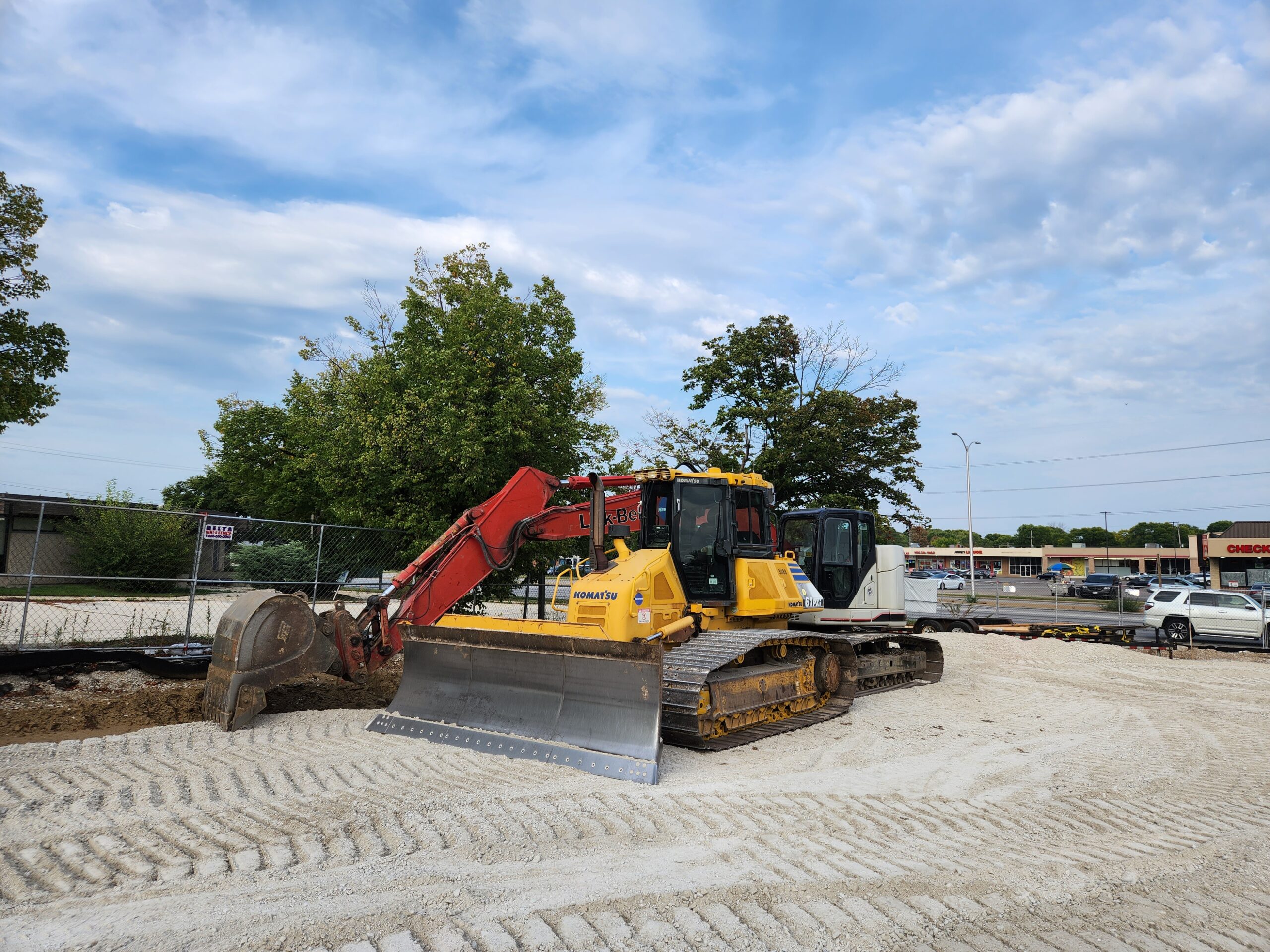
What Is Horse Arena Grading and Why It Matters
Horse arena grading is the process of shaping, sloping, and compacting the layers beneath your arena footing so horses and riders have a safe, consistent surface. A well graded arena sheds water, stays even under heavy use, and supports footing materials so they do not migrate or turn into ruts. Good grading reduces injuries, boosts performance, and cuts long term maintenance costs. In short, it is the foundation of every great ride.
In southeastern Wisconsin, seasons can be tough on arenas. Snowmelt, spring rains, and freeze thaw cycles can destroy weak bases and leave standing water. That is why planning, precision, and proper drainage design are essential. Masterwork Construction brings local soil knowledge and modern equipment to every horse arena grading project to help riders train year round on footing they can trust.
Core Elements of a Well Graded Arena
Smart Slope and Crossfall
Slope is the quiet hero of long lasting footing. Most outdoor arenas perform well with a uniform slope of 1 to 2 percent toward a drainage edge or swale. That means a drop of 1 to 2 feet over 100 feet. Indoor arenas typically use a gentler slope of 0.5 to 1 percent since they are protected from direct rain, but still need water to move toward drains during cleaning or dust control. The key is a smooth, even plane with no birdbaths or high spots. Masterwork Construction uses laser or GPS guided grading to lock in the right slope from corner to corner.
Drainage That Works in All Seasons
Arenas fail from the bottom up when water has nowhere to go. Combine surface slope with subsurface drainage where needed. French drains with perforated pipe along the low edge collect and move water away. Shallow swales around the arena keep outside runoff from entering. In clay rich soils common in parts of Ozaukee and Washington counties, underdrainage can be the difference between a firm base and a sponge. Good drainage protects your investment and preserves footing texture.
Subgrade Preparation
The subgrade is the native soil you build on. It must be shaped to final slope, compacted, and stable. If the subgrade pumps under foot or wheel, everything above it will settle unevenly. In soft areas, consider soil stabilization with geogrid or lime treatment. A woven geotextile separator can also prevent fines from migrating up into your base. Masterwork Construction evaluates soil conditions and recommends the right stabilization method based on site testing and local experience.
Base Layer Design
The base is your arena’s backbone. A typical base uses 4 to 8 inches of crushed, well graded stone with fines that lock together when compacted. In wetter sites, a two layer system helps: a lower drainage layer of larger stone and an upper layer of dense graded aggregate. The base should be compacted to a firm, even surface that is smooth to the hand. If your base ripples under a skid steer, it is not ready for footing.
Footing Depth and Materials
Footing is the cushion and traction layer. Popular options include washed angular sand, sand blended with fiber, or specialized mixes. Aim for 2 to 3 inches of footing for many English disciplines, and 3 to 4 inches for disciplines that need more cushion. Depth depends on the horse, discipline, and rider preference. Consistent depth is as important as the material choice, and that comes back to precise horse arena grading from the start.
Compaction and Moisture Control
Compaction supports even footing and fast drainage. Each layer should be compacted at the right moisture level. Too dry and the base will crumble. Too wet and it will smear. A vibratory roller is ideal for base layers, and a plate compactor helps at edges. Indoors, a reliable water source and dust control plan will keep footing moisture within target range.
Laser Grading and Quality Control
Laser controlled blades or GPS guided dozers keep elevations true to design with tolerances within a quarter inch. After the first compaction pass, check elevations again and correct early. Masterwork Construction uses modern machine control and on site verification to deliver flat, repeatable results that make daily maintenance easier.
Indoor vs Outdoor Horse Arena Grading
Indoor arenas need careful attention to base density and dust control. Slope is subtle but necessary to keep water from puddling during irrigation or cleaning. Adequate ventilation and footing choice help with air quality. Outdoor arenas need more aggressive drainage and edge management to keep material in place during storms. In both cases, plan for access routes, water lines, and safe transitions at gates to avoid trip points or low spots.
The Horse Arena Grading Process Step by Step
- Site assessment and soil testing: Identify soil types, groundwater behavior, and any soft zones that might need stabilization.
- Layout and elevations: Establish arena dimensions, riding lanes, and benchmark elevations for slope and drainage structures.
- Clearing and stripping: Remove vegetation, topsoil, organics, and any unsuitable material. Stockpile topsoil for reuse outside the arena.
- Rough grading: Shape the subgrade to within one inch of final plan, following the designed slope and crossfall.
- Stabilization: Install geotextile, geogrid, or soil treatment where called for by conditions or design.
- Drainage installation: Place underdrains, outlet pipes, and swales. Ensure proper cover, slope, and outlet protection.
- Base installation: Place crushed stone in lifts. Moisture condition and compact each lift to a firm, uniform surface.
- Laser fine grading: Use laser or GPS controls to set final elevations and check with a level or rover across a grid.
- Footing placement: Spread footing evenly to design depth. Use a drag, harrow, or grader to blend and level.
- Final rolling and grooming: Compact as needed and groom the surface so it is ready for first use. Train staff on daily maintenance.
Tools and Equipment That Make a Difference
- Laser level or GPS machine control for precise slopes and grades
- Dozer, skid steer, or motor grader for efficient shaping and spreading
- Vibratory roller for base compaction and plate compactor for edges
- Water truck or hose reel for moisture control during compaction and maintenance
- Tractor with arena drag or groomer for ongoing footing care
- Survey rover and staff for spot checks and quality control
Common Horse Arena Grading Mistakes to Avoid
- Too little slope: Even small puddles lead to soft spots and uneven footing.
- Poor subgrade compaction: A weak subgrade settles and creates waves and ruts.
- Skipping geotextile on soft soils: Fines migrate into the base and trap water.
- Wrong base material: Rounded stone or dirty aggregates will not lock up under load.
- Uneven footing depth: Horses hit the base in shallow spots and bog down in deep zones.
- No edge control: Without edges or berms, footing walks off the arena and into swales.
- Overwatering or underwatering: Moisture out of balance makes footing slick, dusty, or clumpy.
Maintenance Tips to Keep Your Footing Prime
- Drag on a schedule: Light daily drags for high use arenas, weekly for lower use. Cross patterns to prevent waves.
- Water evenly: Keep footing moisture consistent across the arena. Use a sprinkler system or hose reel.
- Watch edges: Pull footing back from rails and edges before it builds up.
- Inspect drainage: After big rains, check outlets, swales, and low spots. Clear debris right away.
- Top off footing: Add material periodically to replace what is lost to wind, tracking, or grooming.
- Seasonal checks: Before freeze, repair low areas. After thaw, drag lightly until the base firms up.
Budgeting for Horse Arena Grading
Costs vary with size, soil conditions, access, and chosen materials. Clearing and stripping on a wooded site takes more time. Clay soils may require stabilization or underdrains. Premium footing blends and automated irrigation raise quality and cost. Many clients approach a full build in phases: earthwork and base first, then footing and irrigation, then amenities like fencing and lighting. A site visit is the best way to build a realistic plan and budget. Masterwork Construction provides value engineering to match goals and price, and we help owners understand tradeoffs so every dollar serves performance and durability.
Why Choose Masterwork Construction for Horse Arena Grading
Based in Grafton and serving Ozaukee, Milwaukee, Waukesha, and Washington counties, Masterwork Construction brings complete earthwork capabilities to horse arena grading. Since 2015, our team has delivered precision grading, excavation, stormwater utility solutions, and site development across southeastern Wisconsin. We combine modern equipment with experienced craftsmen who understand local soils, weather, and how arenas get used day to day.
Our services cover the full site package: excavation, grading, stormwater management, mechanical demolition, gravel driveway installation, pond development, roadway construction, and mass excavation. That breadth lets us manage every step of your arena project, from clearing and subgrade prep to drainage and base construction. We install underground water retention systems, repair storm sewer piping, and bring the same attention to detail to horse arenas that we use on public roadways and athletic fields.
On every job, Masterwork Construction emphasizes safety, clear communication, and teamwork. We use modern machine control, quality aggregates, and proven construction methods to build grade planes that last. Whether you need to rebuild a tired arena or develop a new training facility, we help design, budget, and deliver a surface your horses will love and your riders will trust.
Environmental and Stormwater Considerations
Good horse arena grading respects the land and your neighbors. Plan swales and outlets so water does not erode adjacent areas. Where local codes require it, include infiltration features or underground detention so stormwater releases slowly. Vegetated buffers around the arena catch sediment and filter runoff. For farms with ponds, consider using a pond as a controlled outlet to balance flows. Masterwork Construction designs and builds stormwater solutions that protect your arena and comply with local rules.
Choosing the Right Footing for Your Discipline
Footing choice ties directly to how your arena is graded and drained. Washed angular sand offers traction and stability for most English disciplines. Sand with fiber adds structure and reduces shear. For Western events that need a deeper cushion, adjust footing depth and grooming routines. Always source consistent material and test a small area before committing to a full order. No footing can overcome a soft or uneven base, so get the grading right first, then fine tune the surface.
FAQs About Horse Arena Grading
What is the best slope for an outdoor arena?
A slope of 1 to 2 percent toward a long side or a diagonal works well for most outdoor arenas. The goal is steady drainage without riders feeling off balance.
How deep should my base be?
Most arenas perform well with 4 to 8 inches of compacted crushed stone. Softer soils or heavy use programs benefit from a thicker base and underdrains.
How often will I need to regrade?
With regular dragging and consistent moisture, many arenas only need touch up grading every one to two years. Heavy use or poor drainage can shorten that interval.
Can I convert a pasture into an arena?
Yes, but expect more prep. Pastures often have soft topsoil and organic layers that must be stripped. You will need a compacted subgrade, a proper base, drainage, and then footing.
How long does construction take?
Small outdoor arenas can be completed in two to four weeks with good weather and access. Larger, more complex builds with underdrains, irrigation, and fencing take longer. Masterwork Construction provides clear schedules so you can plan around training and events.
What size should my arena be?
Common sizes include 100 by 200 feet for multipurpose use and 66 by 198 feet for dressage. Choose a size that fits your disciplines, property, and budget. The grading principles are the same at any size.
Getting Started With Masterwork Construction
When you are ready to upgrade your footing, start with a site walk and a simple plan. We will evaluate soils, drainage paths, and access, then create a scope that matches your goals. If you already have a design, we can build it. If you are early in planning, we will help you define slopes, layers, and materials that fit your riding program and budget. Call Masterwork Construction at 414-762-7000 to schedule a consultation. We serve southeastern Wisconsin from our Grafton headquarters and bring heavy civil expertise to every horse arena grading project.
Key Takeaways for Better Horse Arena Grading
- Set the right slope: 1 to 2 percent outdoors and 0.5 to 1 percent indoors.
- Design drainage first: Use swales and underdrains where soils need help.
- Build a strong base: Compact quality aggregate in lifts at proper moisture.
- Use precision tools: Laser or GPS grading delivers even, consistent footing.
- Maintain regularly: Drag, water, and top off footing to extend service life.
- Work with pros: Local experience and modern equipment save time and money.
About Masterwork Construction
Masterwork Construction is a professional earthwork company in Grafton, Wisconsin. Since 2015, we have served Ozaukee, Milwaukee, Waukesha, and Washington counties with excavation, grading, stormwater utilities, mechanical demolition, gravel driveway installation, pond development, roadway construction, and mass excavation. We also deliver commercial and residential site development with value engineering to improve efficiency and control costs. Our culture centers on safety, integrity, and teamwork. From basements and frost footings to athletic fields and horse arenas, we bring precision and quality to every site. Contact us at 414-762-7000 or visit our website to learn more and request a quote for horse arena grading.