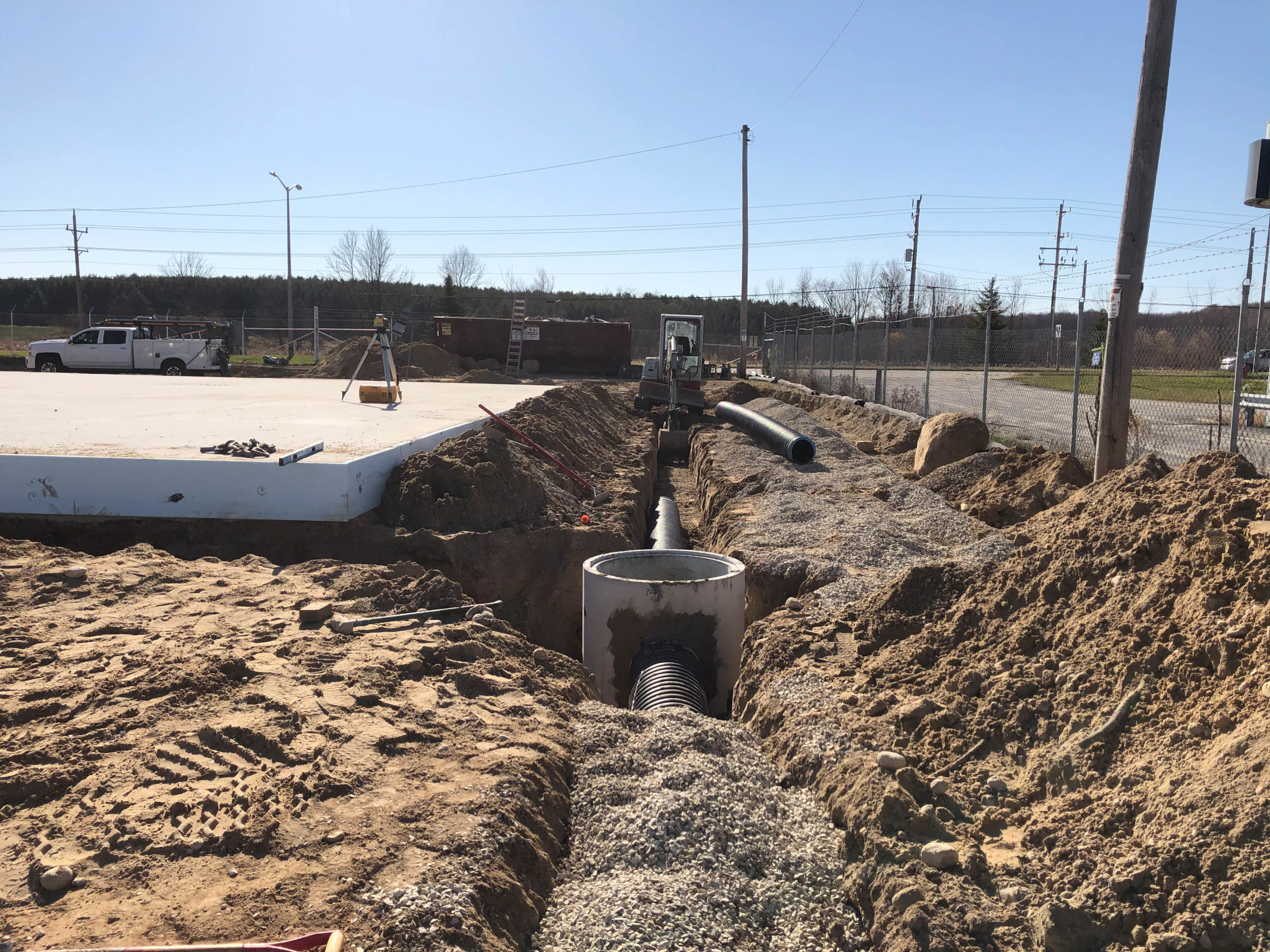
Drainage problems after construction? Learn why new builds still flood, what causes it, and how to fix grading, gutters, and soils. Get expert solutions and protect your investment with practical steps you can take today.
It is frustrating to move into a brand new home or commercial site and find standing water in the yard, soggy lawns, or moisture in the basement. You expect new construction to be perfect. Yet drainage problems after construction are surprisingly common across southeastern Wisconsin. The good news is most issues are fixable with careful diagnosis and the right earthwork plan.
At Masterwork Construction, we help property owners in Grafton, Ozaukee County, Milwaukee County, Waukesha County, and Washington County solve water issues before they damage structures or landscaping. Below we explain why drainage problems can appear even on brand new sites, how to spot the root cause, and what solutions work for our local soils and climate.
Why drainage problems happen even after new construction
New builds go through long construction timelines and many crews. The site changes again and again from foundation excavation to utilities, driveways, and landscaping. Small shifts in grade or soil condition can create big water problems after the final walk-through. Here are the most common reasons we see drainage problems after construction in southeast Wisconsin.
Final grading settles and changes slope
Builders backfill around foundations then place topsoil and seed. Over the next few months that soil settles. Utility trenches and backfill zones often sink more than surrounding areas. The result can be a subtle low spot near the foundation or a negative slope that directs water toward the house. Freeze-thaw cycles speed this up. Even a one inch dip can collect hundreds of gallons during a summer storm.
Soils and compaction reduce infiltration
Many parts of Ozaukee, Milwaukee, Waukesha, and Washington counties have clay or clay loam subsoils. During construction, heavy equipment compacts these soils. Compaction is necessary under roads and structures, but in lawns it dramatically slows infiltration. Water that used to soak in now runs off toward low spots. If topsoil is thin or missing, the problem is worse. Thick, healthy topsoil acts like a sponge and is a key part of good drainage.
Gutters, downspouts, and sump discharge are undersized or misrouted
Roofs shed an amazing amount of water. One inch of rain on a 2,000 square foot roof produces roughly 1,246 gallons. If gutters clog or downspouts drop water at the foundation, the soil quickly saturates. Sump pumps can also recycle water if the discharge pipe dumps near the house. Extending downspouts and routing sump discharge far from the structure is one of the fastest ways to reduce basement moisture.
Stormwater systems clog or get damaged during construction
Yard drains, catch basins, and storm sewer laterals can fill with sediment during final grading or lawn seeding. Pipes get crushed by heavy equipment or misaligned at joints. Later, the system looks fine on the surface, but water backs up during heavy rains. We often locate these hidden failures with a camera inspection and then repair or replace the problem section.
Landscaping and hardscaping change runoff paths
Raised beds, edging, retaining walls, patios, and walkways can create dams that trap water. Even a simple edging strip can block sheet flow if installed higher than the surrounding grade. Sod laid over compacted subsoil will stay wet because the water has nowhere to go. Good design anticipates the final landscape and keeps clear flow paths to safe outlets.
Offsite water and street drainage influence your lot
Your property does not exist in a vacuum. Water can arrive from neighboring lots, uphill fields, or street gutters. Curb cuts, driveway aprons, and road crowns push runoff in certain directions. If the intended swales or ditches are shallow or blocked, offsite water can overload your site and cause erosion or yard flooding.
Climate and rainfall intensity exceed design assumptions
Southeastern Wisconsin has seen more frequent high-intensity storms. Short bursts of heavy rain overwhelm small drains, narrow swales, and undersized gutters. Systems designed for light, steady rain may not handle today’s downpours. Building to current rainfall patterns and adding redundancy keeps water where it belongs.
How to diagnose drainage problems after construction
Good solutions start with solid facts. Here is a simple process property owners can follow before calling in a contractor, along with steps Masterwork Construction uses during site evaluations.
- Observe during a storm. Safely watch your property in a moderate rain. Note where water starts to collect, where it flows, and how long it takes to drain after the storm ends.
- Check the first 10 feet of slope from the foundation. You want about 6 inches of drop within the first 10 feet. Use a 10 foot board and a level, or a laser level for more precision.
- Inspect gutters and downspouts. Clean out leaves, check for sagging sections, and watch discharge points. Confirm water exits at least 6 to 10 feet from the foundation.
- Test the sump discharge. Make sure the pump runs, that the check valve functions, and that the discharge pipe releases to a safe area where water cannot flow back.
- Perform a hose test. Gently run a hose uphill of the problem area and watch the flow path. This reveals hidden barriers or low spots.
- Probe soil and assess infiltration. Use a small shovel or probe to feel the soil profile. Clay subsoil under thin topsoil will pond. Consider a simple percolation test by timing how fast a small test hole drains.
- Look for construction scars. Identify sunken utility trenches, crushed pipe areas, or compacted access routes left by equipment. These often become the first pathways for water.
- Evaluate outlet options. Every drop needs a safe destination. Look for swales, ditches, storm inlets, or areas suited to infiltration like rain gardens.
- Document with photos. Take clear pictures before, during, and after rain. Documentation helps you and your contractor align on the problem and the solution.
- Call a pro for complex sites. If you see recurring basement moisture, erosion, or water moving from offsite sources, schedule a professional assessment. Masterwork Construction provides site grading surveys, pipe camera inspections, and elevation checks to pinpoint causes.
Fixes that work and how Masterwork Construction approaches them
There is no single fix for all drainage issues. The right plan matches your site’s soils, slopes, and structures. Here is how we solve common problems in southeastern Wisconsin.
Regrading for positive drainage
Regrading sets the foundation for long-term performance. We target a clean, even slope away from the structure, with about 6 inches of fall in the first 10 feet where space allows. Yard swales typically need at least a 1 percent slope to keep water moving. We shape swales to receive water from patios, sidewalks, and lawn areas, then route flow to a safe outlet like a storm inlet, ditch, or daylighted discharge point. After shaping, we blend in quality topsoil and compact lightly so the grade holds without becoming hardpan.
Gutter and downspout upgrades
Roof water control is a fast, cost-effective win. Many homes benefit from larger 6 inch gutters and 3 by 4 inch downspouts. We place downspouts so they do not point at driveways or low spots. We add 10 foot extensions or buried solid pipe to carry water away. Pop-up emitters or bubbler pots near the outlet disperse flow without erosion. We also recommend gutter guards that keep out debris without restricting flow.
French drains, underdrains, and daylighted pipes
Where surface grading alone cannot solve the problem, we add subsurface drainage. A typical French drain uses perforated pipe in a trench with washed stone and a geotextile fabric wrap. We set pipe with 1 percent slope when possible and connect to a reliable outlet. Underdrains behind retaining walls or along paved edges capture seepage and protect structures. For long-term reliability, we specify durable pipe materials and clean stone, and we place inspection ports for future maintenance.
Dry wells, rain gardens, and infiltration basins
In areas without a good surface outlet, we build infiltration features sized for local soils. A rain garden filled with deep-rooted native plants can soak up runoff while adding beauty. Dry wells store water temporarily in a stone-filled chamber that releases water slowly into the ground. Because clay soils can limit infiltration, we test and design accordingly. In high water table areas we choose solutions that do not cause backflow or frost heave.
Driveway and sidewalk corrections
Hard surfaces can trap or redirect water. We check driveway cross slopes, adjust heights at garage aprons, and add trench drains when needed. Sidewalks should not pitch toward the house. Where elevations are tight, a shallow channel drain can move water to a side yard swale without a major rebuild.
Erosion control and soil rebuilding
Freshly graded soil can erode during the first storms. We protect slopes with erosion control blankets and establish turf quickly. Adding compost and a healthy layer of topsoil improves infiltration and reduces runoff. Strategic rock riprap in swales controls velocity and prevents ruts. These details extend the life of your drainage system and keep your landscape looking great.
Basement and foundation defenses
If your basement is damp, we look beyond the surface. We verify exterior drain tile function, sump pump capacity, and discharge routing. We seal obvious entry points at window wells or penetrations. While interiors can be waterproofed, stopping water before it reaches the wall is usually more effective and more durable.
Costs, timelines, and what to expect
Every site is unique. That said, here are typical ranges we see in southeastern Wisconsin. Minor regrading and downspout extensions may range from a few hundred dollars to a few thousand. French drains or underdrains often range from two thousand to eight thousand depending on length and depth. Yard reslope with topsoil and lawn restoration can range from three thousand to twelve thousand. Storm line repairs vary widely based on access and depth. Most projects take one to five working days, plus a few weeks for turf establishment. Masterwork Construction provides clear estimates, a practical schedule, and careful cleanup so you can get back to enjoying your property.
Why choose Masterwork Construction for drainage and earthwork
Masterwork Construction is a professional earthwork company based in Grafton, Wisconsin. Since 2015 our team has delivered precise excavation, grading, and stormwater solutions for residential and commercial clients throughout Ozaukee, Milwaukee, Waukesha, and Washington counties. We use modern equipment, new technologies, and experienced craftsmen to get drainage right the first time.
- Local soil and climate expertise. We design for clay subsoils, freeze-thaw cycles, and heavy summer downpours common in southeastern Wisconsin.
- Comprehensive services. Excavation, grading, stormwater utilities, mechanical demolition, gravel driveways, ponds, roadway construction, and mass excavation. We can solve complex drainage problems that cross multiple scopes.
- Value engineering. We optimize designs to save cost without sacrificing performance. When a simple regrade will do, we recommend it. When a robust system is needed, we build it right.
- Precision and quality. Laser grading, careful compaction control, and clean material specs deliver durable results that drain well year after year.
- Safety and integrity. Our culture centers on teamwork, communication, and respect, which shows in our job sites and our long-term client relationships.
- Clear communication. We explain options in plain language, provide transparent pricing, and keep you informed from start to finish.
If you are dealing with drainage problems after construction, Masterwork Construction is ready to help. Call 414-762-7000 to schedule a site visit or reach out through our website to get started.
Frequently asked questions
Is it normal for a new home to have drainage problems?
Unfortunately, yes. Settling soils, compacted yards, and small grading errors often show up after the first few heavy rains. The key is to correct the grade, manage roof water, and create a reliable outlet before moisture causes damage. A professional assessment will confirm what is going on and what to fix first.
Will regrading alone fix my wet basement?
Often, improving the slope around the foundation makes a big difference. Many homes also need gutter upgrades, downspout extensions, or changes to sump discharge. In some cases, we add French drains or repair storm lines. The right solution often combines a few simple steps.
How much slope do I need away from the house?
A general rule is 6 inches of drop in the first 10 feet around the home. A consistent 2 percent slope in yards and swales keeps water moving. Space, property lines, and sidewalks affect what is possible. Where space is tight, we use drains and hardscape adjustments to redirect water.
What time of year can drainage work be done in Wisconsin?
Most grading and drainage work is best from spring through late fall when soils are not frozen. Early spring and late fall require extra erosion control. Some repairs and pipe work can be done in winter if conditions allow. We plan the schedule to protect your lawn and ensure quality compaction.
Do I need a permit for drainage improvements?
It depends on the scope and location. Minor grading typically does not require permits. Work near wetlands, roadways, or storm sewer connections often does. Masterwork Construction helps identify any required permits and handles documentation when needed.
Can landscaping fix drainage issues?
Landscaping helps when it supports a solid drainage plan. Deep-rooted plants, rain gardens, and healthy topsoil improve infiltration. But plants cannot overcome a negative slope or a blocked outlet. We start with grade and flow paths, then enhance performance with the right landscaping.
How far should downspouts discharge from the foundation?
We recommend 6 to 10 feet at minimum, more on flat lots or near basements. Buried solid pipe to a pop-up emitter or bubbler pot keeps yards clean and moves water safely away.
Next steps to solve drainage problems after construction
If you see puddles that linger for days, erosion lines in your lawn, or moisture in your basement after a storm, do not wait. Water problems are easier and cheaper to fix early. Masterwork Construction can assess your site, identify the cause, and deliver a practical plan tailored to your property and budget.
Call 414-762-7000 or contact Masterwork Construction through our website to schedule a visit. We will review grades, check gutters and discharge points, evaluate soils, and present clear options to stop drainage problems after construction. With the right plan and the right team, your new build can finally perform the way it should.
Masterwork Construction serves homeowners, builders, and property managers across southeastern Wisconsin with excavation, grading, stormwater utility solutions, mechanical demolition, gravel driveway installation, pond development, roadway construction, mass excavation, and site development. Our goal is simple. Build sites that drain well, last long, and make life easier for our clients.